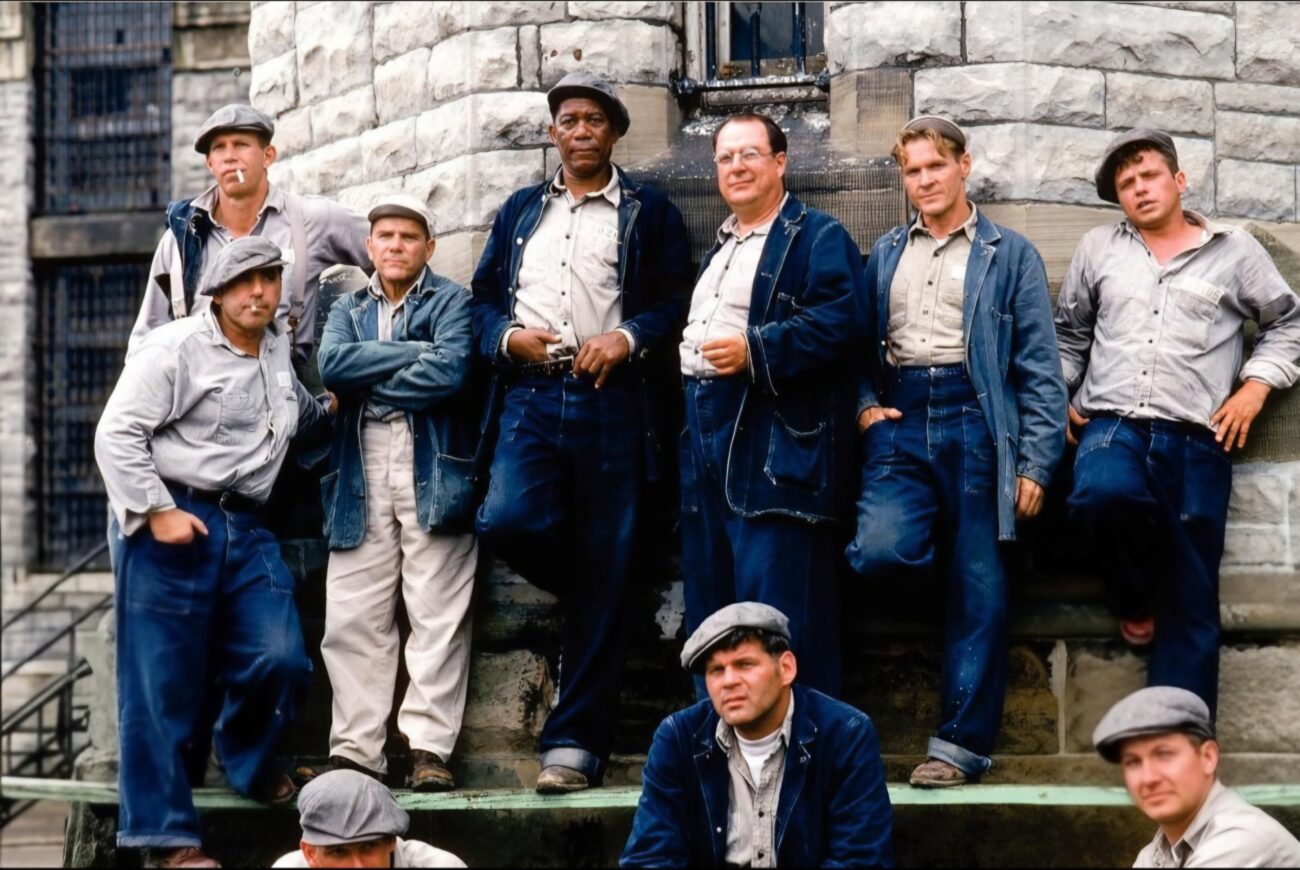
The Shawshank Redemption Parents Guide: Age Rating, Safety, and Content Breakdown
The Snippet Bait: The Shawshank Redemption is not kid-friendly. Rated R for graphic prison violence, pervasive profanity, and depictions of sexual assault, it is best suited for mature teens aged 16 and up. While its themes of hope and friendship are profound, the “institutional” grit requires significant emotional maturity.
At-a-Glance Data Table
|
Feature |
Details |
|---|---|
|
Official MPAA Rating |
R (Language and Prison Violence) |
|
Expert Recommended Age |
16+ |
|
Emotional Intensity |
9/10 (High) |
|
Violence/Gore |
High |
|
Language/Dialogue |
High |
|
Nudity/Sexual Content |
Moderate (Implied Sexual Violence) |
|
Key Positive Messages |
Perseverance, Hope, Integrity, Friendship |
The Plot & Parental Perspective
Based on a Stephen King novella, The Shawshank Redemption follows the story of Andy Dufresne (Tim Robbins), a banker sentenced to two consecutive life terms for a crime he claims he didn’t commit. Over two decades, Andy navigates the brutal realities of Shawshank State Penitentiary, forming an unbreakable bond with Ellis “Red” Redding (Morgan Freeman).
From a parental lens, this isn’t just a “prison movie.” It is a deep dive into the psychological impact of confinement and institutionalization. For younger viewers, the concept of being “trapped” or “falsely accused” can trigger significant separation anxiety or a fear of systemic injustice. The film doesn’t pull punches; it explores the crushing weight of losing one’s identity and the sheer endurance required to remain human in a dehumanizing environment.
While the ending is arguably one of the most cathartic in cinematic history, the journey there is paved with trauma. Parents should be prepared to discuss the concepts of corrupt authority and the difficulty of re-entering society after a long absence.
Content Breakdown: The “Nitty-Gritty” Details
As a 15-year veteran in the parenting and media space, I’ve seen how “classic” status can sometimes blind parents to a film’s actual intensity. Here is the objective breakdown of what is actually on screen.
Violence and Scares
The violence in Shawshank is realistic and often sudden.
- Physical Assaults: Inmates are frequently beaten by guards. One notable scene features a “fresh fish” (new inmate) being beaten into a coma/death by a head guard.
- “The Sisters”: This group of predatory inmates physically assaults Andy multiple times. These scenes are brutal and include Andy fighting back with desperation.
- Self-Harm & Suicide: A pivotal subplot involves an elderly inmate, Brooks, who struggles with life outside prison. His story culminates in a deeply emotional and visual scene involving suicide.
- Corruption: The Warden uses violence and even execution (via a guard’s rifle) to maintain control and hide his crimes.
- Blood and Gore: There are scenes showing bloodied faces, a gunshot wound to the head (suicide), and Andy crawling through a sewage pipe, which while not “gory” is intensely visceral.
Language and Dialogue
The dialogue is reflective of a high-security prison in the 1940s-60s.
- Profanity: Expect hundreds of uses of the F-word, “sh*t,” and “a**hole.”
- Slurs: There are several instances of racial slurs and derogatory terms for sexual orientation, used primarily by the “villainous” characters to dehumanize others.
- Insults: Beyond swearing, the dialogue is thick with verbal abuse from the guards toward the inmates, designed to show the stripping away of dignity.
Mature Themes & Substance Use
- Sexual Assault: This is perhaps the most difficult content for parents. While not explicitly graphic in a “sexual” sense, the implied and attempted rapes of Andy by “The Sisters” are terrifying and psychologically heavy.
- Substance Use: Inmates smoke cigarettes constantly (a period-accurate detail). In one famous scene, Andy negotiates for his “colleagues” to have three cold beers each while working on a roof. It is framed as a moment of regained humanity, not an endorsement of underage drinking.
- Institutionalization: The film tackles the “triggering” idea that a person can become so used to prison that they can no longer function in the free world.
Developmental Considerations by Age Group
Understanding how your child processes information is key to deciding if they are ready for The Shawshank Redemption.
Ages 5–12: Not Recommended
Is The Shawshank Redemption too scary for toddlers or elementary kids? Yes. The themes of false imprisonment and the threat of physical assault are far outside the developmental “safety zone” for this age group. They likely won’t understand the nuances of Andy’s hope and will instead fixate on the trauma of the “bad guys” winning for most of the film.
Ages 13–15: Parent’s Discretion (Exercise Caution)
Younger teens might be drawn to the “IMDb Top 250” prestige, but they may need a Melania trigger warning regarding the sexual violence and the suicide of the character Brooks. If your teen is highly sensitive to themes of injustice or physical bullying, wait another year or two. If you choose to watch, do so together.
Ages 16–18: Recommended with Discussion
At this age, most teens have the emotional maturity to look past the grit and see the philosophical beauty of the film. They can analyze the “Get busy living, or get busy dying” mantra and discuss the social issues regarding prison reform and the American justice system.
Why You SHOULD Let Your Teens Watch The Shawshank Redemption
Despite the “R” rating, this film is a masterclass in resilience and the power of the human spirit.
- The Value of Education: Andy’s persistence in building a prison library highlights how knowledge and literature can provide a “mental escape” from even the darkest circumstances.
- Male Friendship: It provides a rare, healthy depiction of a deep, platonic bond between two men (Andy and Red) based on mutual respect and emotional support.
- Moral Integrity: Andy refuses to let the prison system break his inner sense of self. He remains a “gentleman” in a place that tries to make him a monster.
- Historical Perspective: It offers a lens into the mid-20th-century penal system, sparking interest in history and social justice.
Conversation Starters for the Car Ride Home
- On Hope: Red says hope is a “dangerous thing” in prison. Andy says it’s the “best of things.” Who do you think was right at the beginning of the movie, and why did Red change his mind?
- On Institutionalization: Why did Brooks find it so hard to live in the “real world” after being in Shawshank for 50 years? How can a person keep their identity when they are told what to do every second?
- On Justice: How did the Warden justify his actions? Is “legal” the same thing as “right”?
- On Friendship: How did Andy and Red help each other survive? What was the most important thing they gave to one another?
- On Persistence: Andy spent 19 years digging his tunnel. What does that teach us about “slow and steady” progress versus looking for a quick fix?
Final Expert Verdict
The Shawshank Redemption is a cinematic masterpiece, but it is a “heavy lift” for a family movie night. It is a detailed parents review for The Shawshank Redemption‘s conclusion that you should save this for when your children are older teens. The payoff is worth the wait, but the “Shawshank streaming age limit” in your house should firmly be set at 15 or 16.

I am a journalist with 10+ years of experience, specializing in family-friendly film reviews.