The Mysterious Gaze of the Flamingo is not rated because it has not undergone the official rating process by the Motion Picture Rating (MPA). Not recommended for younger children (under 13–14).
Love, people like to say, is blind. Diego Céspedes, in his striking debut feature The Mysterious Gaze of the Flamingo, quietly but firmly pushes back on that cliché. For him, love isn’t blind at all it moves through eyes, through the particular way we look at the people we want, and the braver, more dangerous act of truly seeing them. In this film’s world, vision becomes both a lifeline and a loaded weapon. You feel it especially if you’ve ever existed in a queer or trans body: the possibility that the person who draws your gaze might return it with desire, or with violence, or with both tangled together.
Highly Recommended: Dust Bunny Parents Guide
From that deceptively simple idea, Céspedes spins a folk tale with mythic contours. Flamingo takes place in a tiny mining settlement in northern Chile in the early ’80s, a place so remote and sun-baked it seems suspended outside of time. The miners who live there dust-covered men clinging to routine have only one refuge from their monotonous labor: the cabaret run by Mama Boa (Paula Dinamarca). She presides over a troupe of “transvestites,” the term of the era, though the film’s tender use of she/her pronouns makes clear the women’s lived identities. They perform for these lonely workers dancing, lip-syncing, shimmering under cheap lights on a knife’s edge between being adored and being endangered. You can sense how desire curdles in these men, morphing into suspicion and cruelty. They cling to the belief that these women carry a lethal “plague,” passed not through touch or blood but through the electric spark of a direct, loving gaze. The AIDS metaphor is right there on the surface Céspedes even spells it out near the finale, a choice that lands with a touch less elegance than the film’s earlier, more magical realist whispers.
Highly Recommended: Reflection in a Dead Diamond Parents Guide
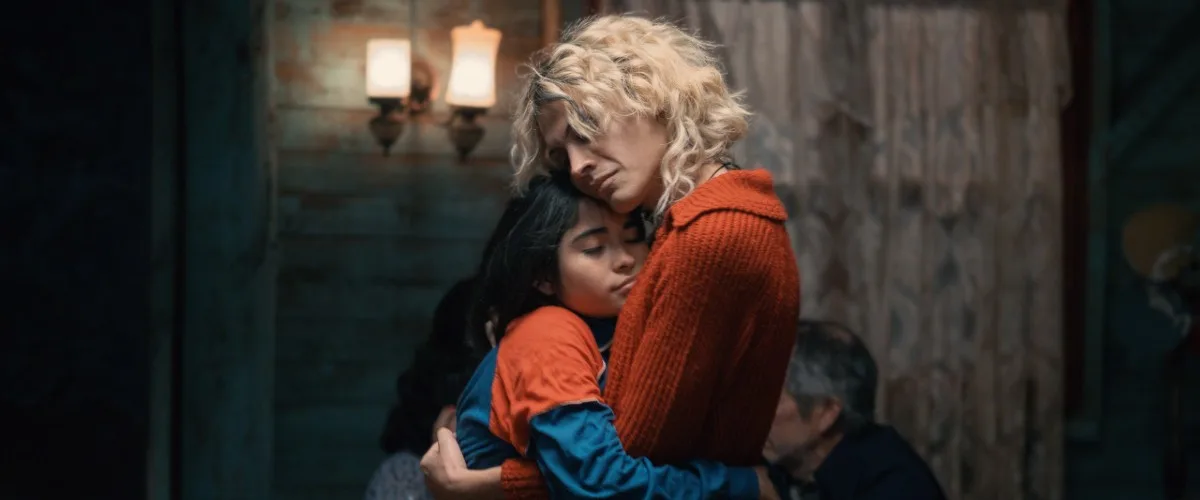
At the center of this fragile ecosystem is Lidia (Tamara Cortés), an eleven-year-old girl hovering on the threshold of adolescence. Raised within this household of queer women, she grows up surrounded by a kind of fierce, improvised love protective, joyous, but always shadowed by danger. Her adoptive mother is Flamingo (Matías Catalán, whose delicacy on screen makes you instinctively lean closer), the star performer at Mama Boa’s cabaret. Flamingo’s body is betraying her, and so is the world around her: the miners who lust for her, and a former lover, Yovani (Pedro Muñoz), who storms back into her life clutching a gun and a desperate plea for release from the “illness” he believes she gave him. His arrival becomes the spark that sends Lidia searching for answers about the plague, about desire, about the stories adults tell to protect or control children. The confrontation has the cadence of a desert western, and the film leans into that sensibility. Angello Faccini shoots in a lush, boxed-in 4:3 frame, somehow echoing both the wide moral frontier of John Ford and the tight-knit social worlds of Howard Hawks.
Beneath the dread and the folklore, though, is a strand of deep, sustaining love the kind you find in queer communities that build their own families when the outside world shows its teeth. One of the film’s loveliest strengths is how attentively it lingers on the daily rituals of that found family: the teasing breakfasts, the small gestures of care, the way the women orbit Lidia like protective birds. As she watches them, she learns not just survival but joy, and you can feel how those lessons mark her. The film also has a sharp eye for the ways queer bodies are fetishized and exoticized, and how swiftly that desire can mutate into harm. Intimate moments slide into near-violence; tenderness flickers back after brutality. The vast desert only intensifies the isolation our characters clutch each other in cramped rooms, seeking a safety that never quite holds.
Highly Recommended: Kill Bill: The Whole Bloody Affair Parents Guide
Of course, folklore can be unruly, and Céspedes embraces that unruliness. The story wanders, almost dream-drunk, and you may sense it stretching a slim premise to fill a feature-length frame. Certain beats repeat, circling the same emotional questions as Lidia matures. And yet that drift has its own strange power: it lets us soak in the town’s mythic atmosphere, to feel the constant tug between longing and fear that shapes everyone’s days. The film’s most arresting moments arrive when Faccini and Céspedes let the surreal bleed into the domestic visions of forbidden queer love that turn something as simple as a lover’s touch into an act of ecstatic defiance.
In the end, The Mysterious Gaze of the Flamingo announces a filmmaker worth watching. Its Un Certain Regard win at Cannes makes sense; it’s the kind of debut that feels both bold and searching. (And its status as one of Letterboxd’s “Unreleased Gems” is a reminder that even now, there are films fighting to be seen.) What lingers most isn’t its allegory or even its eerie fable structure, but its conviction. It’s a story about queer resistance woven into the fabric of a supernatural legend, and it honors its gender-nonconforming characters with a sweetness and defiance that feel hard-won. By the time the credits roll, the film has quietly widened your gaze maybe even your heart.
Detailed Content Breakdown for Parents
Violence & Intensity: The film contains significant emotional and societal violence. There are sequences of community hostility, fear-driven aggression, and possibly vigilante sentiments toward the queer community. Given the plot which features a deadly illness, unrest, and violence directed at marginalized characters many scenes are likely intense, heavy, and emotionally charged.
Language: While I couldn’t find specific citations about strong profanity, the tone is serious. Given the setting fear, panic, and bigotry there may be harsh language, slurs, or derogatory remarks directed at queer characters. Parents should expect mature dialogue and possibly hateful language.
Sexual Content / Nudity: The film deals with queer identity, desire, and attraction within the cabaret community. While it may not be explicit in a pornographic sense (given the film’s tone and focus on stigma and myth), themes of sexual attraction and sensuality are central to the story. Plus, the suspicion and fear around “gaze” and love make the erotic subtext a heavy emotional undercurrent. Parents should be aware of mature themes of sexuality and relationships, even if not graphically depicted.
Drugs, Alcohol & Smoking: I found no specific mention of substance abuse, drugs, or smoking in public synopses. The danger and hostility come more from prejudice and community fear than from substance use.
Parental Concerns
- The themes are heavy: illness, persecution, possible death, and social violence not light viewing.
- Even though it’s a coming-of-age story through a child’s eyes, it deals with adult issues: fear, bigotry, illness, death, and sexuality. Some scenes may upset children.
- The film will likely spark difficult conversations questions about prejudice, mortality, and identity. Parents should be ready to discuss those with their children.
- Given its mature tone and imagery, the film is not appropriate for younger children, or for those who are emotionally sensitive to trauma or discrimination.

Stephanie Heitman is a seasoned journalist and author dedicated to helping parents navigate the world of Hollywood entertainment through thoughtful, family-oriented film reviews. With over a decade of experience in writing and a passion for fostering safe, enriching viewing experiences, Stephanie launched Parentguiding.com to provide parents with the insights they need to make informed choices for their families.