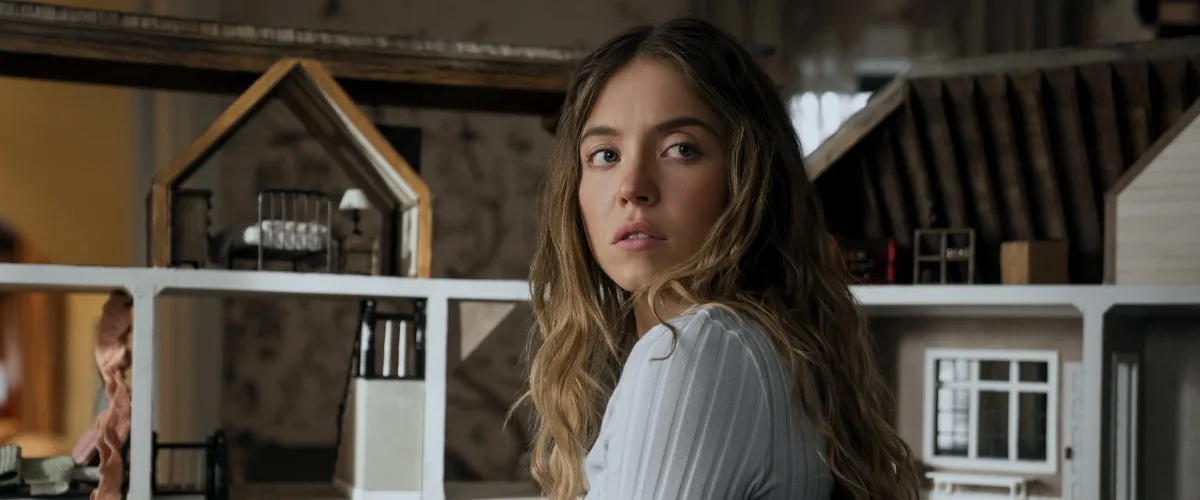
Paul Feig’s adaptation of Freida McFadden’s The Housemaid arrives with the promise of a juicy, disreputable good time a glossy thriller stocked with secrets, reversals, and bad behavior simmering beneath the surface of suburban affluence. And to be fair, the film delivers its share of twists, some of them genuinely surprising. But it also leaves you with an itch it never quite scratches: the sense that this could have been nastier, stranger, more playfully unhinged than it allows itself to be. You don’t leave feeling cheated, exactly. You leave wishing the movie had loosened its grip and had a little more fun with its own perversity. Given that Feig is the filmmaker behind Spy and Bridesmaids, that restraint feels especially noticeable.
Highly Recommended: Peter Pan and Wendy Parents Guide
The story centers on Millie, played by Sydney Sweeney, a young woman scraping by under the weight of probation and the urgent need to find stable work in order to stay free. You can feel her desperation in the early scenes the quiet panic of someone who knows how thin the ice is beneath her feet. That’s what makes the job interview feel like a miracle when it finally arrives. Nina Winchester, Amanda Seyfried’s picture-perfect Long Island housewife, lives in a sprawling home so aggressively white it borders on antiseptic. She needs help keeping the place immaculate, watching her daughter, maintaining the illusion. Nina’s smile is wide and welcoming, and she offers Millie a live-in position almost too quickly, as if fate itself has intervened.
That illusion cracks almost immediately. The very next morning, Nina unravels over something as trivial as handwritten notes for a PTA meeting, spiraling into a tantrum so extreme that only her husband, Andrew, can pull her back from the edge. From there, the temperature in the house rises. Nina begins to toy with Millie, testing her, undermining her, setting traps that feel both petty and cruel. Andrew, meanwhile, pays the new housemaid a little too much attention, his interest sliding from polite concern into something unmistakably charged. When the quiet rivalry between Millie and Nina finally erupts, the story pivots, and Millie discovers just how rotten the foundations of this seemingly idyllic marriage really are.
Feig, who’s already dipped his toes into the glossy suburban thriller with A Simple Favor and its sequel, clearly enjoys orchestrating these narrative swerves. He leans into the shocks, hitting them fast and loud, aiming squarely for that collective audience gasp. Some of those moments land exactly as intended. Others are so heavily telegraphed that you can feel the audience bracing for them long before they arrive, which drains the surprise and earns a few audible groans. Rebecca Sonnenshine’s screenplay, to its credit, never loses sight of the class divide at the heart of the story the way wealth exerts its own gravitational pull, tempting people to compromise themselves just to stay close to it.
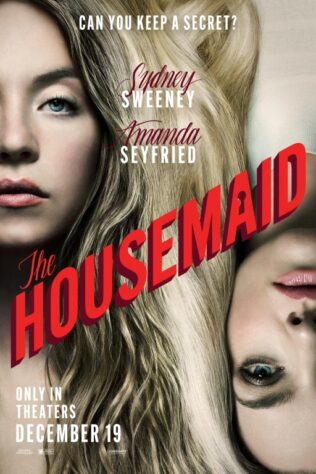
Still, the film’s first half plays things relatively straight, more domestic drama than delicious trash. Seyfried is the lone performer who seems fully aware of how campy this setup could be, and she leans into it with relish. It’s only in the later stretch that the movie finally shifts gears, abandoning its sober tone for something closer to mischief. Suddenly, it’s less It Ends With Us and more A Simple Favor. The change is invigorating and also frustrating, because it highlights what the film might have been if it had committed earlier to a bolder, more brazen sensibility, something edging toward the uncomfortable theatricality of May December.
Highly Recommended: 10 Best New Movies & Shows Coming To Netflix (December 2025)
Seyfried is, without question, the film’s dominant force. Her Nina is a walking nerve, a performance pitched just shy of outright horror-movie hysteria. She cycles effortlessly through brittle smiles, weepy breakdowns, and flashes of unblinking fury, and she does it with such ferocity that the air seems to bend around her. It’s hard not to notice how completely she overwhelms the rest of the cast. Sweeney, by contrast, spends much of the movie looking as if she’s drifting through it, her performance muted and distant until the final act, when she suddenly snaps into focus, transforming into someone else entirely and finally appearing to enjoy herself.
That late-game shift is jarring in a way Seyfried’s volatility never is. You find yourself wishing Sweeney had either met Seyfried’s intensity head-on or played her stillness as a deliberate counterweight, a calm center baffled by the storm swirling around her. Brandon Sklenar, cast as the resident heartthrob, doesn’t make much of an impression. His Andrew is pleasant until he isn’t, a man whose affections turn on a dime. The film flirts with a brooding, Mr. Rochester-style dynamic, and while the DNA of Jane Eyre is faintly present in The Housemaid, the chemistry never quite ignites.
For all its hesitations, the movie does perk up considerably in its final third, when Sweeney finally steps into the chaos and the film stops apologizing for its own tawdriness. The heavy foreshadowing like the repeated emphasis on that grand, winding staircase in the Winchester McMansion fades into the background, allowing the actresses to revel in their bad behavior, strutting through scenes in tailored dresses and sharp heels.
Highly Recommended: The Walking Dead Parents Guide
The editing occasionally feels a little rough, as if the film is rushing to stitch its pieces together, and some lines of dialogue land with accidental humor. But those flaws don’t fully derail the pleasure of watching impeccably dressed suburban women finally confront the true villain of the story. In the end, The Housemaid may not be as wicked as it wants to be but when it lets go, even briefly, you can see the movie it was aching to become.
Content Breakdown for Parents
Violence & Intensity: Violence is a significant element, especially in the latter half of the film. There are moments of bloody violence, physical assaults, and implied harm that are meant to shock rather than entertain. Some scenes are abrupt and emotionally jarring, designed to keep viewers on edge. While not constant, the violence is impactful and not suitable for younger audiences.
Language: Strong, frequent profanity throughout, including repeated uses of the F-word and other adult language. The tone of the dialogue often reflects emotional cruelty, manipulation, and hostility, which may be just as unsettling as the words themselves.
Sexual Content & Nudity: This is one of the film’s most serious content areas. The movie includes explicit sexual material, nudity, and scenes involving sexual assault or coercion. These moments are portrayed as traumatic rather than titillating, but they are still intense and potentially triggering. Parents should be aware that these themes are central to the story’s emotional impact.
Drugs, Alcohol & Smoking: Characters drink alcohol socially and sometimes excessively, often as a coping mechanism. No heavy drug use is depicted, but substance use contributes to the film’s sense of emotional instability.
Parental Concerns: Parents may be surprised by just how dark this film goes, especially given director Paul Feig’s past association with comedies. The sexual violence themes, in particular, may be distressing and are not always heavily signposted before they occur. This is not a “fun thriller night” watch for teens, even mature ones, without serious consideration.

Stephanie Heitman is a seasoned journalist and author dedicated to helping parents navigate the world of Hollywood entertainment through thoughtful, family-oriented film reviews. With over a decade of experience in writing and a passion for fostering safe, enriching viewing experiences, Stephanie launched Parentguiding.com to provide parents with the insights they need to make informed choices for their families.