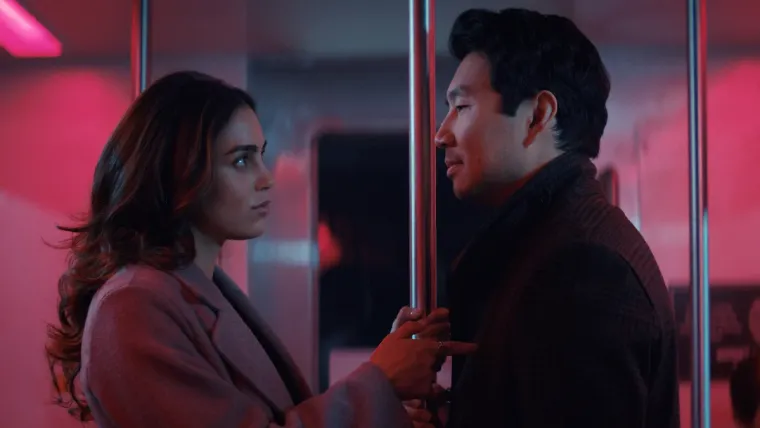
The Copenhagen Test carries a TV-MA rating for strong violence, adult language, sexual content, and disturbing psychological themes.
You’ve got the instincts of an operative and the mind of an analyst where were you in the mid-’90s when I needed you?” Peter Moira says this with a half-smile, seated across from Alexander Hale inside an anechoic chamber, a SCIF stripped of echoes and comforts alike. Brian d’Arcy James delivers the line like a compliment that’s already curdling into something else. Simu Liu’s Hale listens, guarded. You can feel the imbalance of power humming beneath the silence.
That exchange neatly captures the uneasy engine driving Peacock’s sci-fi espionage thriller The Copenhagen Test. Over eight densely packed episodes, the series plays like a cerebral puzzle box that also knows when to snap into sudden, bruising motion. It’s talky and thoughtful one moment, then violently kinetic the next, with hand-to-hand fights staged sharply enough that you wince when kitchen blades flash or AK-47 rounds tear through the frame. The violence isn’t ornamental; it arrives with a jolt, unsettling because it feels inevitable.
Of course, Moira’s praise is slippery. Maybe he’s lying outright. Maybe he’s telling a partial truth that serves a larger manipulation. Maybe he’s calmly steering Hale toward an early grave punctuated by the whisper of a suppressor. That uncertainty is the show’s oxygen. No one here has the full picture, and even those who think they do are almost certainly wrong. The pleasure and the anxiety of The Copenhagen Test comes from watching those missing pieces drift in and out of alignment.
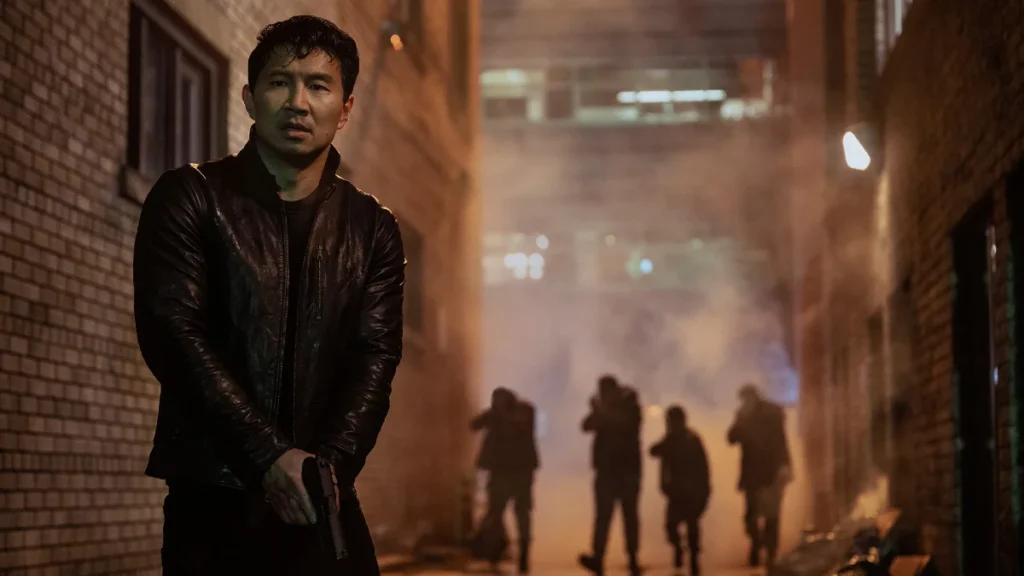
Hale himself is written as a walking contradiction, and Liu plays him that way. A first-generation Chinese American, Hale is the son of parents who fled China during the chaos surrounding the Tiananmen Square massacre. His mother was pregnant when they escaped, carrying both him and a set of expectations heavy enough to warp a spine. He would be American, fully and unquestionably except the older he gets, the more he senses how fragile that promise is. His face, his name, his history quietly invite suspicion.
Highly Recommended: Not Without Hope Parents Guide
That tension sharpens in the world of espionage, where loyalty is currency and doubt is poison. Choices matter here in ways that feel almost cruelly philosophical. The series invokes the moral terror of Sophie’s Choice not lightly, and not comfortably by presenting its own impossible test: a soldier pinned down in hostile territory can save one life. Does he rescue an American adult, following orders to the letter, or a foreign child, whose survival will never appear on a report? You might feel your stomach tighten just imagining it.
Hale’s decision in that moment and what follows fractures something inside him. Panic attacks creep in. His fear blooms uncontrollably under pressure. The career he envisioned for himself, as a decisive defender of the country he loves, is suddenly on pause. He dreams instead of joining The Orphanage, a shadow agency overseeing the rest of the intelligence apparatus internal affairs for spies. But there’s a fear he can’t shake: that he’s already broken. That he’s compromised. He works desperately to hide the cracks.
That concealment becomes impossible once the show makes its sharpest sci-fi turn. Hale discovers his brain has been hacked. An adversary of The Orphanage has hijacked his senses, turning his eyes and ears into surveillance tools. Everything he experiences classified briefings, quiet moments alone, sex with a friend-with-benefits is streamed live to an unseen enemy nursing a vendetta against the agency. It’s an invasion so intimate it feels almost obscene.
Worse still are the physical consequences. Hale suffers brutal headaches, blurred vision, what look alarmingly like mini-strokes. For someone already battling anxiety, the effect is devastating. He becomes a live wire, and The Orphanage knows it. They exploit his vulnerability, using him as bait to flush out their elusive foe. Watching this unfold, it’s hard not to feel the quiet horror of an institution deciding that one damaged asset is worth sacrificing for a larger win.
Highly Recommended: The Monster of Florence (2025) Parents Guide
For Simu Liu, who also serves as a producer, the role feels like a calculated and smart pivot after the bright, buoyant heroics of Shang-Chi and the Legend of the Ten Rings. His physical abilities are still very much in play the fight scenes make sure of that but The Copenhagen Test pushes him further. Liu gets to reveal intelligence, restraint, and emotional weariness. He carries the show with a grounded leading-man presence, and it helps that the series resists the urge to soften him with syrupy romance. Sex exists here, desire too, but sentimentality is kept firmly at bay.
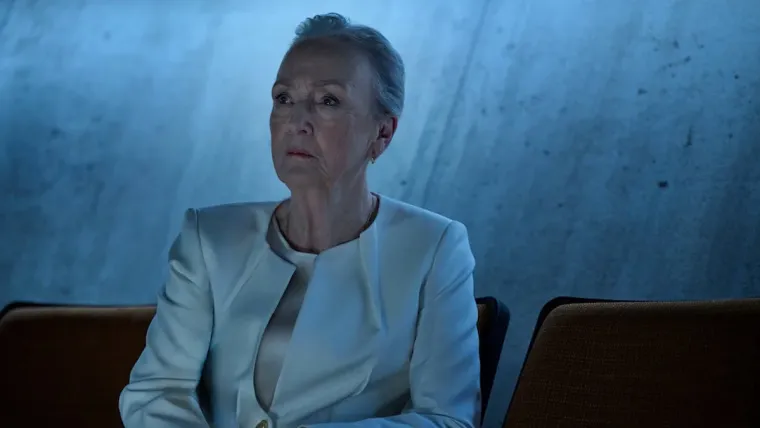
Kathleen Chalfant is a quiet force as St. George yes, the dragon slayer the enigmatic head of The Orphanage. There’s a deceptive serenity to her, the kind that comes from years spent navigating lethal power structures and surviving them. You sense the bodies buried behind her calm, and the unresolved grudges still circling. Whether she intends to shield Hale or discard him once he’s served his purpose is never clear, and that ambiguity keeps the tension taut.
D’Arcy James, meanwhile, brings weary credibility to Moira, an administrator who’s seen decades of deceit calcify into routine. His ambition to unseat St. George feels less like villainy than inevitability. Around them, the ensemble clicks into place: Melissa Barrera is dangerously charismatic as an assassin whose charm is matched only by her unreliability; Sinclair Davis brings alertness and intuition as a new team member capable of seeing angles others miss; and Saul Rubinek adds texture as the Hale family’s oldest American friend, a veteran spy whose loyalties have grown comfortably indistinct.
Highly Recommended: Fallout’ Season 2 Parents Guide
The Copenhagen Test arrives riding the current surge of prestige spy television, alongside Slow Horses, Andor, and The Day of the Jackal. Creator Thomas Brandon and his writers lean heavily into fractured timelines two hours ago, eleven months earlier, yesterday a device that can induce narrative whiplash and the faint dizziness of a binge gone too far. Still, the show scratches a familiar itch. It’s knotty, serious, and morally restless. And by the end, there’s little doubt that Liu has passed the test, emerging as a compelling and credible anchor for this dark, thoughtful thriller.
Content Breakdown for Parents
Violence & Intensity: Violence is frequent, realistic, and often abrupt. Gunfights, knife attacks, assassinations, and close-quarters combat occur throughout the series, with visible blood and painful consequences. The action is well-choreographed but never celebratory; injuries linger, and death often arrives suddenly. Just as unsettling is the psychological violence — characters manipulate, betray, and emotionally exploit one another, creating a constant sense of danger that extends beyond physical harm.
Language: Strong profanity is used regularly, including multiple f-bombs and harsh language typical of espionage settings. The dialogue has a cynical, sometimes abrasive edge, reflecting the moral fatigue of its characters. There are no overt slurs, but the verbal tone can be sharp and emotionally cutting.
Sexual Content / Nudity: The series includes several sexual encounters between adult characters. These scenes are brief and generally non-graphic, though partial nudity is visible. Sex is portrayed matter-of-factly rather than romantically and is never framed for titillation, but it is clearly adult content and unsuitable for younger viewers.
Drugs, Alcohol & Smoking: Alcohol consumption appears regularly, often in professional or social settings. Some characters smoke, though it’s not glamorized. There is no depiction of recreational drug abuse, but substance use is treated as a normal part of the adult world these characters inhabit.
Scary or Disturbing Scenes: This may be the most challenging aspect for sensitive viewers. The concept of mind hacking losing control over one’s own senses and privacy is deeply unsettling and central to the plot. The show depicts panic attacks, anxiety spirals, physical breakdowns, and ethical dilemmas involving civilians and children in danger. While not overtly graphic, these moments can linger emotionally and may disturb even older teens.
Parental Concerns: Parents should be aware that the series’ themes of surveillance, loss of bodily autonomy, and ethical tradeoffs involving innocent lives may be more disturbing than the violence itself. Sexual content and frequent profanity may also surprise viewers expecting a more conventional action thriller.
Recommended Age Range: Ages 17 and up is the safest recommendation. Some mature 16-year-olds may be able to handle the material, but this is fundamentally adult storytelling — emotionally, ethically, and thematically.

Matthew Creith is a movie and TV critic based in Denver, Colorado. He’s a member of the Critics Choice Association and GALECA: The Society of LGBTQ Entertainment Critics. He can be found on Twitter: @matthew_creith or Instagram: matineewithmatt. He graduated with a BA in Media, Theory and Criticism from California State University, Northridge. Since then, he’s covered a wide range of movies and TV shows, as well as film festivals like SXSW and TIFF.