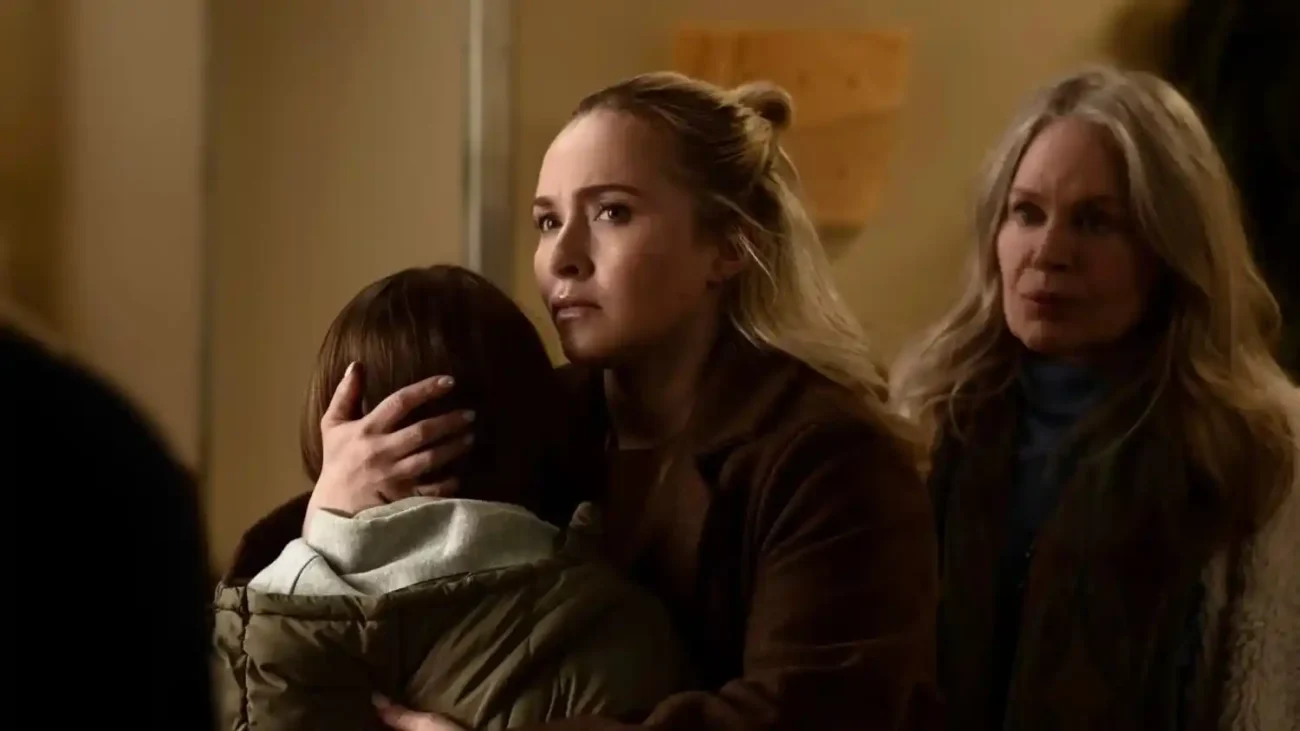
Dreams, Doctor Henson (Eric Lutes) explains to Sarah (Hayden Panettiere), remain one of psychology’s last lawless territories. For all our progress in mapping the brain, the logic of the unconscious still slips through our fingers, cloaked in speculation and half-formed theory. It’s a promising place to begin Brandon Auman’s Sleepwalker, a film that wants to explore that murky terrain but almost immediately betrays how little curiosity it has about the subject. If nightmares are usually our fears translated into fragmented, slippery images that vanish as soon as we wake, then Auman’s vision feels trapped in blunt literalism, turning mystery into something painfully obvious.
We’ve all experienced that awful sensation of being stuck inside a bad dream, aware that something is wrong but powerless to escape. Sleepwalker attempts to bottle that feeling through Sarah, who suffers from REM sleep behavior disorder never quite explained outright, but clearly treated here as a hereditary curse passed down to her children as well. Anyone familiar with Mike Birbiglia’s work will recognize the real-world danger of the condition: people can tumble out of windows or wander into traffic while asleep. It’s frightening stuff. The film, unfortunately, doesn’t trust that inherent dread.
Sarah relies on a supposedly foolproof method to determine whether she’s awake: she looks at her hand and counts her fingers. “You can’t do that when you’re sleeping,” she insists. The film clings to this idea with desperate confidence, returning to it again and again as her fingers sprout extras like a carnival gag, transforming her hand into something vaguely Addams Family-esque. You can feel the movie congratulating itself on the cleverness of the device, even though it never clarifies what Sarah is meant to gain from the realization. She can’t control the dream. She can’t reshape it. Awareness leads nowhere.
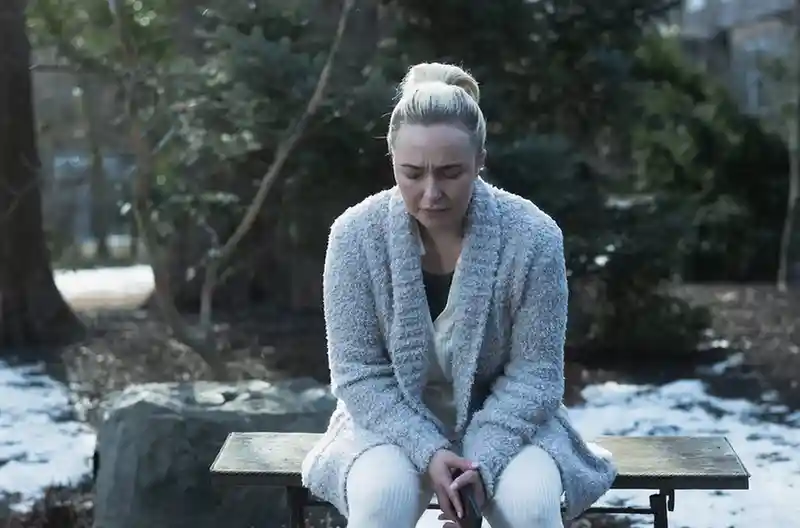
The premise is so aggressively strange that success was always going to be a long shot, but Sleepwalker compounds the problem by anchoring itself to performances that feel unmoored from anything resembling emotional truth. That becomes especially clear once Sarah’s fragile equilibrium is shattered by a car accident that leaves her abusive ex-husband Michael (Justin Chatwin) in a coma and kills their daughter, Aimee (Corinne Sweeney). From there, the film sinks into a barrage of flashbacks maybe memories, maybe nightmares depicting a relationship defined by rage and physical violence. Instead of grounding these scenes in pain or fear, the film stages them with such excess that they tip into unintentional comedy, melodrama masquerading as intensity.
Now raising her son Holden (Laird LaCoste) alone, Sarah leans heavily on her mother Gloria (Beverly D’Angelo) while preparing for a group art show organized by her lone friend Aniya (Cathy Salvodon). Her paintings, meant to visualize her inner torment, are meant to unsettle but mostly they’re just bad, the kind of symbolic shorthand that mistakes ugliness for insight. As Michael’s condition worsens, Sarah’s dreams spiral further out of control, and the film begins flirting with the idea that these nightmares might be projected by Michael himself from beyond consciousness. The notion pushes Sarah toward the thought of pulling the plug, a decision complicated by the relentless presence of Michael’s sister Joelle, played by a truly baffling Mischa Barton, who seems to have wandered in from an entirely different movie.
At this point, it becomes hard not to notice how desperately the film wants its ambiguity to feel profound. Is this a story about trauma refusing to stay buried? A warning about the cost of avoiding fear? Or a straight-faced tale of supernatural possession? The movie doesn’t seem to know, and worse, doesn’t seem to care. Details feel arbitrarily chosen, as if specificity itself were an afterthought Holden’s favorite food is simply “pizza with extra cheese and pepperoni,” the default setting of childhood preference. Sarah, a New England painter, reacts with disbelief when her mother’s mild hippie tendencies emerge, including the decision to sage a house that the film has already established as haunted. Logic drifts in and out like an inconvenience.
There is, oddly enough, one scene that crackles with life, and it arrives almost by accident. Gloria’s clairvoyant friend Bai (Lori Tan Chinn) storms in like a force of nature, barking orders, demanding a whiskey sour, and preparing to conduct a séance. For a brief moment, the film finds a rhythm something human, something playful and you can feel what Sleepwalker might have been if it had embraced that energy instead of smothering itself in portent.
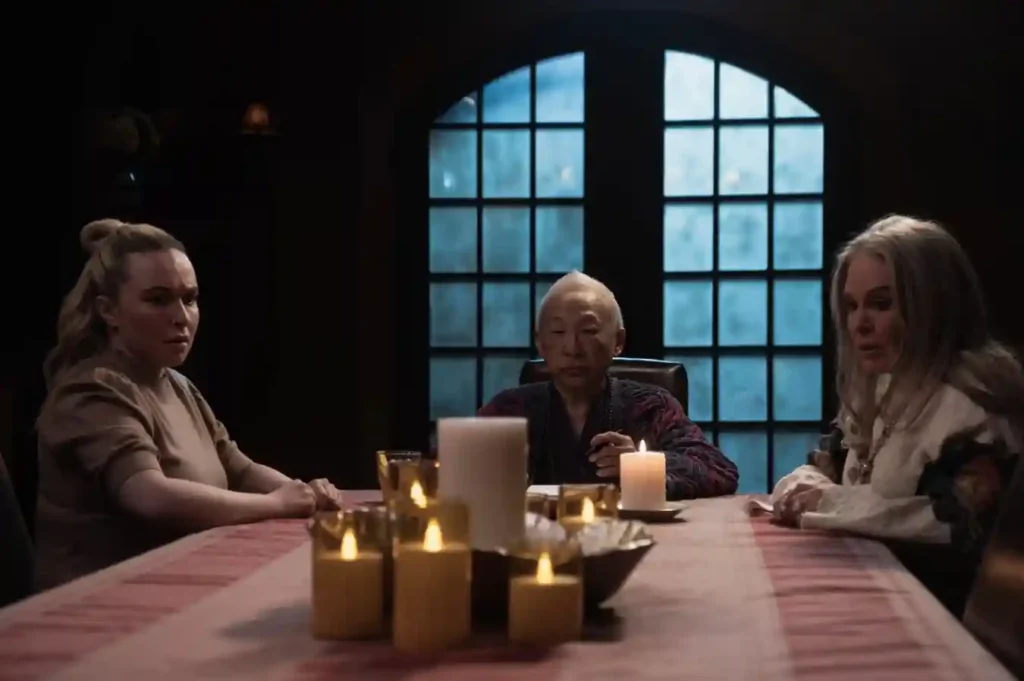
Visually, the movie resembles a sanitized haunted-house promo, the kind of soft-focus spookiness you might see looping before boarding the Haunted Mansion. There’s no real danger here, no texture to the fear. Auman seems convinced that keeping the audience as disoriented as Sarah will generate suspense, but nothing is ever unclear. Every scare announces itself. Every shift in reality is telegraphed well in advance. There isn’t a single moment that feels earned, or even particularly curious. Only the final, bleak twist lands with any surprise and by then, you might already be drifting off. If you do, chances are your dreams will be far more imaginative than anything Sleepwalker has to offer.
Sleepwalker Parents Guide
Sleepwalker is not rated by the Motion Picture Association (MPA). That absence of an official rating is worth noting, because while the film rarely shocks through excess, it traffics heavily in emotional distress, domestic trauma, and bleak psychological imagery that may weigh more heavily on younger viewers than its surface-level horror suggests.
Violence & Intensity: Violence in Sleepwalker is less about spectacle and more about emotional damage, though there are moments of physical harm that may be disturbing. A major plot event involves a severe car accident that leaves one character in a coma and results in the death of a child; the aftermath of this tragedy hangs over the film and fuels much of its oppressive tone.
There are repeated flashbacks to an abusive marriage, including scenes of shouting, threats, and implied physical violence. These moments are played with heightened melodrama rather than realism, but the subject matter itself domestic abuse, fear within the home, and lingering trauma may be upsetting, particularly for sensitive viewers.
The film also leans into horror imagery tied to nightmares: distorted bodies, unsettling dream logic, and an ongoing inability to distinguish waking life from sleep. While not graphically violent, the constant sense of psychological instability creates a persistent atmosphere of unease.
Language: The language in Sleepwalker is relatively restrained. Profanity is present but not pervasive, appearing mostly during emotionally charged confrontations or moments of stress. There are no notable slurs, and the dialogue tends to favor intensity of tone over explicit vulgarity.
Sexual Content / Nudity: There is no explicit sexual content or nudity in Sleepwalker. References to an adult romantic relationship are present, primarily in the context of marriage and its breakdown, but sexuality is not a focus of the film.
Any discomfort in this area stems more from emotional power dynamics and abuse rather than sexual imagery or behavior.
Drugs, Alcohol & Smoking: Alcohol appears briefly, most notably in a scene involving a character who casually demands a cocktail before performing a séance. Drinking is portrayed as incidental rather than indulgent, and there is no depiction of drug use or smoking.Substance use does not play a significant role in the narrative and is unlikely to be a major concern for most parents.
Age Recommendations: While Sleepwalker lacks graphic violence, sexual content, or heavy profanity, its themes are distinctly adult. The film grapples with child death, domestic abuse, psychological breakdown, and persistent dread. Recommended for ages 15 and up, depending on the viewer’s sensitivity to emotional trauma and unsettling psychological material. Younger teens may find the subject matter confusing or distressing, and parents may wish to watch alongside older teens to provide context or discussion afterward.
Sleepwalker opens theatrically and on VOD January 9, 2026.
Highly Recommended:

Stephanie Heitman is a seasoned journalist and author dedicated to helping parents navigate the world of Hollywood entertainment through thoughtful, family-oriented film reviews. With over a decade of experience in writing and a passion for fostering safe, enriching viewing experiences, Stephanie launched Parentguiding.com to provide parents with the insights they need to make informed choices for their families.