Put Your Soul on Your Hand and Walk is Rated PG-13 For thematic elements involving grief, brief strong language, and fantasy sequences that may be intense for younger audiences.
Review: “Put Your Soul on Your Hand and Walk” — Review
Ever watched a film that makes you question what it really means to see someone not as a headline, not as a statistic, but as a human being with laughter, fear, and dreams? Sepideh Farsi’s Put Your Soul on Your Hand and Walk does exactly that.
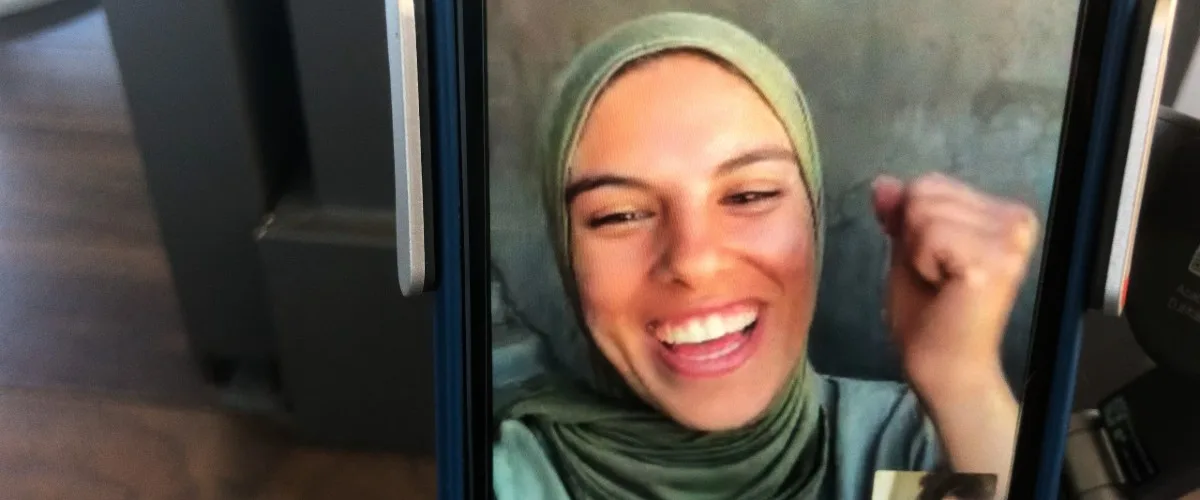
The film follows Farsi’s long-distance friendship with 24-year-old Palestinian photojournalist Fatma Hassona, a young woman whose daily reality unfolds under bombardment in Gaza. Told through WhatsApp video calls, Fatma’s side of the story appears on Farsi’s iPhone screen grainy, pixelated, and fragile yet somehow more alive and personal than any high-definition war coverage on the news. Between brief, glitchy connections, Fatma shares moments of laughter, poetry, and devastating loss. Through it all, her radiant smile never disappears, even when recounting the deaths of 13 loved ones.
The film feels intimate and immediate, like you’re intruding on a sacred space two women separated by oceans and war, connected only by signal and faith. Despite the distance, Put Your Soul on Your Hand and Walk pulses with warmth and humanity. Fatma’s optimism becomes both heartbreaking and heroic, her spirit a soft rebellion against the machinery of destruction that surrounds her.
Visually, the film is stripped down to essentials iPhone screens, news clips, the glow of digital communication yet that simplicity becomes its strength. There’s no stylization to hide behind, no cinematic gloss. The distance and distortion of the video calls are part of the storytelling; they are the story. Farsi doesn’t romanticize Fatma’s situation or try to interpret it through an outsider’s lens. Instead, she listens. She documents. She holds space.
Watching this film feels a bit like standing in front of a memorial that is still being built. We know where it’s heading. When the news comes that Fatma and her family have been killed in a targeted airstrike the film transforms before our eyes from a conversation to an elegy. What began as a record of life becomes a record of loss. And yet, paradoxically, that loss immortalizes her. Fatma’s laughter, her faith, her belief in joy amid ruin all of it is preserved in these pixelated frames.
If you’ve ever been moved by the emotional depth of For Sama or the poetic urgency of Waltz with Bashir, you’ll feel the same ache here. But Farsi’s film is quieter, smaller radical in its intimacy. It reminds us that hope, even when it feels naïve, is a form of resistance.
Verdict: Put Your Soul on Your Hand and Walk is not just a documentary; it’s a call to remember, to feel, and to refuse detachment. It’s a film that won’t leave you comfortable and it shouldn’t. Fatma’s smile might haunt you long after the credits roll, but maybe that’s the point. Bearing witness is the least we can do.
Content Breakdown for Parents
Violence & Intensity: No graphic violence. The film includes a few emotionally intense scenes: a car accident (offscreen), dreamlike depictions of drowning, and one scene where Ari’s hands glow painfully as she loses control of her gift. The imagery is artistic and metaphorical rather than realistic, but it may unsettle sensitive viewers.
Language: Occasional mild profanity (“hell,” “damn”) and one stronger expletive used in a heated emotional moment. No slurs or hate speech. Tone is more emotional than aggressive.
Sexual Content / Nudity: A gentle romantic subplot between Ari and Kai includes brief kissing and hand-holding. No nudity or sexual situations.
Drugs, Alcohol & Smok: One scene shows adults drinking wine at a wake. No substance abuse or smoking depicted.
Scary or Disturbing Scenes: The surreal dream sequences include shadowy figures, melting landscapes, and distorted faces that represent fear and regret. They’re more emotionally haunting than scary, but might be too intense for kids under 10.
Parental Concerns: The movie’s surreal, emotional tone might confuse or overwhelm younger children expecting a straightforward fantasy. The metaphors for death and trauma are meaningful but heavy. Teen audiences (13+) are more likely to connect with its introspective themes.
Highly Recommended:

Stephanie Heitman is a seasoned journalist and author dedicated to helping parents navigate the world of Hollywood entertainment through thoughtful, family-oriented film reviews. With over a decade of experience in writing and a passion for fostering safe, enriching viewing experiences, Stephanie launched Parentguiding.com to provide parents with the insights they need to make informed choices for their families.