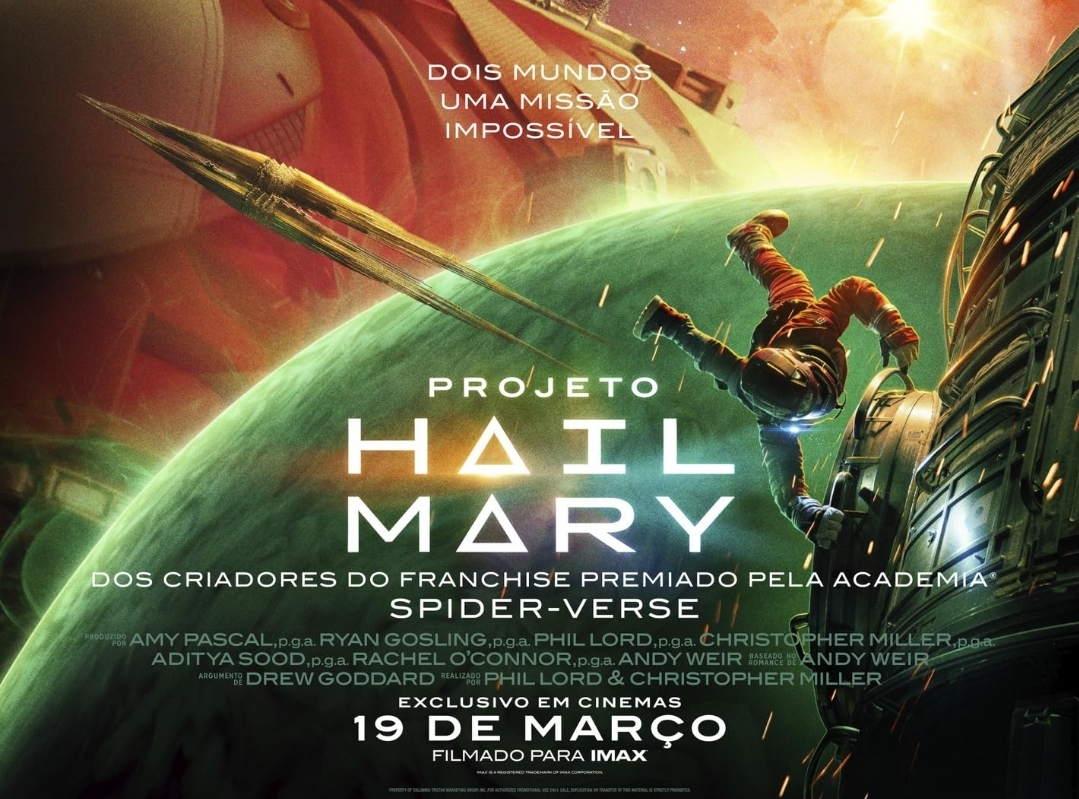
Project Hail Mary (2026) Parents Guide: Is It Kid-Friendly?
With Caution. Project Hail Mary (2026) is a science-heavy survival adventure with moderate peril, tense space scenarios, and complex scientific themes. While not graphic, its emotional stakes and suspense may be intense for younger viewers, making it best suited for older kids and teens.
Quick-Scan Safety Card
| Category | Rating | Details |
|---|---|---|
| MPA Rating | PG-13 (expected) | Rated for peril, thematic elements, and some language |
| Target Age | 11+ | Best for tweens/teens comfortable with suspense |
| Violence | Low–Medium | Space peril |
| Sex/Nudity | Low | None |
| Language | Low–Medium | Occasional profanity |
| Positive Role Models | ⭐⭐⭐⭐ /5 | Scientific curiosity |
What is Project Hail Mary (2026) About? (No Spoilers)
Based on Andy Weir’s bestselling novel, Project Hail Mary follows Ryland Grace, a mild-mannered middle school science teacher who wakes up alone on a spaceship with no memory of who he is or why he’s there.
As fragments of his memory return, Grace realizes he’s humanity’s last hope. Earth faces an extinction-level astrophysical crisis, and he has been sent on a desperate mission to another star system to discover a solution.
The film blends hard science, humor, and emotional storytelling. Themes include isolation, sacrifice, scientific discovery, and unexpected friendship.
Parents should note emotional triggers including:
- Existential threat to humanity
- Isolation and memory loss
- Moments of intense survival tension
- Scenes involving death and sacrifice
While the story is ultimately hopeful, its scientific concepts and emotional stakes may be overwhelming for very young viewers.
Why is Project Hail Mary (2026) Rated PG-13?
The Motion Picture Association is expected to rate the film PG-13 for intense sequences of space peril, thematic material, and some language.
From a modern parenting perspective, the rating feels appropriate. The film contains suspenseful survival moments, but it avoids graphic violence, sexual content, or extreme profanity.
The biggest factor for younger viewers is psychological tension, not graphic imagery.
Several scenes involve:
- Equipment failures in deep space
- Fear of suffocation or starvation
- The looming possibility of global extinction
These ideas can be frightening for children who are sensitive to existential threats or isolation themes.
However, compared with many PG-13 sci-fi films, Project Hail Mary leans strongly toward science problem-solving and character growth rather than action spectacle.
Detailed Content Breakdown
Violence & Gore
Violence is minimal and largely situational, typical of science-based survival stories.
Most tension comes from environmental dangers rather than physical combat.
Examples include:
- Characters dealing with life-threatening equipment failures in space
- Moments where oxygen or power supplies are at risk
- A few scenes where characters are injured during accidents
- Suspenseful sequences involving space travel hazards
There is no graphic gore. Injuries are generally implied rather than shown.
However, the psychological intensity of being alone in deep space may feel scary for younger children.
Profanity & Language
Language is moderate but not excessive.
Expected content includes:
- A few uses of “shit”
- Occasional “damn” or “hell”
- Mild frustration-based swearing during stressful situations
There are no frequent F-words expected, and profanity is largely situational rather than aggressive.
Parents sensitive to language should still be aware that the protagonist often reacts to crises with realistic exasperation.
Sexual Content & Nudity
Sexual content is virtually nonexistent.
Parents can expect:
- No nudity
- No sexual situations
- Possibly mild adult references in dialogue, but nothing explicit
Romantic relationships are not the focus of the story. The narrative centers on survival, friendship, and scientific discovery.
Substance Use
Substance use is very limited.
Possible instances include:
- Brief background references to alcohol consumption in adult settings
- No drug use
- No smoking portrayed as a major behavior
Substance use is not glamorized or plot-relevant.
Age-by-Age Viewing Guide
Toddlers & Preschoolers (0–5)
Verdict: Not Recommended
Young children will struggle with both the conceptual complexity and the suspenseful atmosphere.
Key concerns:
- Intense isolation themes
- Scenes of danger in space
- Long dialogue sequences about science
At this developmental stage, children prefer visual storytelling and emotional safety, which this film does not prioritize.
Parents seeking age-appropriate options may want to explore lighter sci-fi films instead.
Elementary School Kids (6–10)
Verdict: Cautious for Older Kids
Some curious science-loving kids in the 9–10 range may enjoy the movie.
However, parents should consider:
- The scare factor of being alone in space
- Complex astrophysics explanations
- Themes about planetary extinction
Sensitive children may feel anxious about the idea that Earth could be in danger.
Watching together and pausing for discussion can help younger viewers process the story.
Tweens & Teens (11–15)
Verdict: Recommended
This age group is the ideal audience.
Tweens and teens can appreciate:
- The STEM problem-solving
- The emotional growth of the protagonist
- The film’s themes of cooperation and sacrifice
The story also introduces ethical questions about risk, responsibility, and global survival, which resonate strongly with teens.
For science-minded kids, this movie may actually spark interest in astronomy, physics, and engineering.
Positive Messages & Educational Value
Project Hail Mary is unusually rich in educational themes for a mainstream sci-fi film.
Key takeaways include:
1. Scientific Curiosity
The story celebrates experimentation and critical thinking. Problems are solved through testing hypotheses, not brute force.
2. Collaboration Across Differences
The film emphasizes that cooperation even with the unexpected is essential to survival.
3. Perseverance
The protagonist repeatedly fails before succeeding. This reinforces the idea that scientific progress requires persistence.
4. Global Responsibility
The mission highlights the idea that individual actions can impact the entire planet.
5. Empathy
Unexpected friendships challenge the main character to reconsider assumptions about intelligence and communication.
For STEM-curious kids, this movie is a rare example of science portrayed accurately and heroically.
5 Discussion Questions for Families
Watching together? These questions help kids process the story more deeply.
- Why do you think Ryland Grace was chosen for the mission even though he wasn’t a traditional astronaut?
- What moments in the movie showed the importance of teamwork?
- How did the character deal with fear and uncertainty while alone in space?
- What scientific ideas in the movie felt realistic or surprising to you?
- If you were in the same situation, what would have been the hardest decision to make?
Family discussions can turn the movie into a mini science and ethics lesson.
Common Questions About Project Hail Mary (2026)
Is Project Hail Mary too scary for kids?
For children under 10, the suspense of isolation in space and the threat to Earth may feel intense. Most tweens and teens, however, will find the film exciting rather than frightening.
Does the movie have a post-credits scene?
No major post-credits scene is expected. The story resolves its central arc before the credits, though some theaters encourage viewers to stay for the soundtrack and visual sequences.
Are there any strobe light warnings in Project Hail Mary?
Some space travel and equipment malfunction scenes may include brief flashing lights, but extended strobe sequences are not a core part of the film.
Final Verdict for Parents
Project Hail Mary (2026) is one of the most intellectually engaging sci-fi films aimed at a mainstream audience in years.
While its themes of planetary danger and isolation may be intense for younger kids, older tweens and teens will likely find it thrilling, thought-provoking, and inspiring.
For families interested in science, space exploration, and stories about human ingenuity, this film is well worth watching together.
Best age to watch: 11+ with parental guidance.

I am a journalist with 10+ years of experience, specializing in family-friendly film reviews.