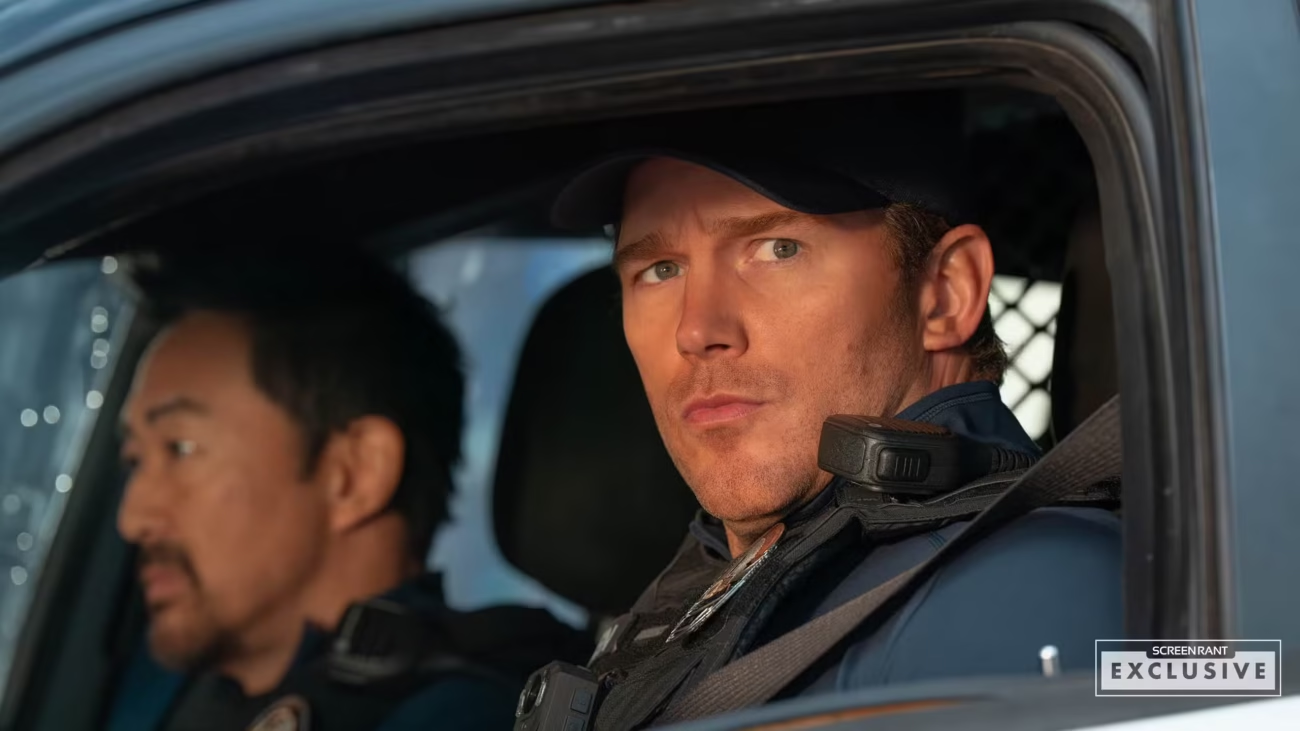
Mercy 2016 is Rated PG-13 by Motion Picture Rating (MPA) for violence, bloody images, some strong language, drug content and teen smoking.
“Mercy” is being sold as a slick thriller about artificial intelligence and its suffocating reach into modern life, what it actually resembles is another entry in the “screenlife” subgenre a film experienced largely through desktops, surveillance feeds, and digital interfaces. That approach isn’t inherently a problem. In fact, screenwriter Marco van Belle’s core idea is genuinely promising: imagine a man accused of murder trapped inside an A.I.-controlled courtroom, given just 90 minutes to prove his innocence before a machine renders a final verdict. It’s premise rich enough to sustain an entire, thoughtful film, one that could dig into ethics, technology, power, and the fragile nature of truth. But director Timur Bekmambetov who has flirted with this format before, most notably with the eerily effective “Profile” and the chaotic energy of earlier works like “Wanted” and “Night Watch” seems far less interested here in coherence or depth than in cheap jolts and B-movie excess. Logic bends, patience evaporates, and the digital novelty wears thin long before the credits roll.
The story is set in a near-future Los Angeles where the justice system has evolved into the Mercy Courts, an A.I.-driven institution that judges cases based on biometric data and accumulated evidence. Chris Pratt plays Detective Chris, who awakens to find himself strapped into a chair within this system. His digital overseer is Judge Maddox (Rebecca Ferguson), a serene yet unsettling presence who informs him that he stands accused of murdering his estranged wife, Nicole (Annabelle Wallis). He has 90 minutes to lower his probability of guilt or face execution.
Chris, reeling and apparently fresh from a relapse, tries to gather himself. He reaches out to his sponsor, Rob (Chris Sullivan), contacts his daughter Britt (Kylie Rogers), and calls on his L.A.P.D. partner Jaq (Kali Reis) to help dig up anything that might save him. Through a computer terminal, Chris gains access to a vast surveillance network, allowing him to hop between camera feeds across the city, piecing together fragments of the truth while watching his guilt percentage hover ominously above him.
Highly Recommended: People We Meet on Vacation Parents Guide
If you pause too long to think about how this world actually works, the whole thing begins to wobble. Bekmambetov doesn’t want you interrogating the infrastructure of the Mercy Courts; he wants you locked into Chris’s subjective panic. Chris helped usher this A.I. system into existence, yet he wakes up confused, disoriented, and oddly slow to grasp the stakes. When Judge Maddox calmly informs him that he’s hovering near 100% guilty, the setup should feel terrifying. Instead, much of the tension collapses under the weight of Chris Pratt’s performance. Pratt is likable, charismatic, and reliable in certain modes, but deep, sustained dramatic anguish has never been his strongest suit. Too often here, his line readings feel flat, his reactions undercooked. Where there should be desperation, dread, and existential terror, there is instead the sense of an actor comfortably collecting a paycheck while seated for most of the runtime. It’s hard to feel the ticking clock when the man at the center of it seems only mildly perturbed.

The film keeps Chris tethered to Judge Maddox in an ongoing procedural chess match, with the Mercy system granting him access to an absurdly powerful surveillance apparatus. Body cams, security cameras, doorbell feeds everything is available at the flick of a cursor. The movie flips rapidly between windows and screens, evoking last year’s “War of the Worlds” in its restless digital voyeurism. Drones glide through the skyline, offering omniscient perspectives that make the world feel both hyper-connected and strangely artificial.
Conveniently, though, access to certain key footage especially anything that might definitively confirm or deny Chris’s guilt remains just hazy enough to preserve narrative ambiguity. Through all this, Chris tries to function as a detective from his chair, calling contacts, giving instructions, and clinging to the hope that his daughter won’t come to believe the worst of him. Jaq becomes his physical proxy in the outside world, racing across rooftops, tearing through traffic on a hoverbike, and essentially transforming the film into something closer to a futuristic buddy-cop action piece.
That shift in tone is one of the film’s most frustrating missteps. “Mercy” gestures toward being a mystery about Nicole’s death, but her murder gradually becomes an afterthought. Bekmambetov seems far more energized by spectacle than by emotional or thematic coherence. The film abandons the fragile potential of its screenlife structure and devolves into a barrage of chases, gunfire, and escalating chaos. Any viewer familiar with genre conventions will likely guess the truth behind the murder early on casting alone practically gives it away and the script seems to know this, compensating by piling on momentum rather than crafting genuine intrigue. The final act becomes a blur of ticking clocks and noisy confrontations, as if sheer volume might substitute for insight.
Highly Recommended: 28 Years Later: The Bone Temple (2026) Parents Guide
Bekmambetov’s work has always leaned toward the bombastic. From the stylized excess of “Wanted” to the pulpy ambition of his Russian fantasy films, subtlety has never been his primary currency. But even by those standards, “Mercy” feels disappointingly hollow. It gestures toward big ideas about surveillance, algorithmic justice, the erosion of human judgment but never explores them with any seriousness. What’s left is a muddled mystery and a half-built A.I. world that collapses under even light scrutiny. You can feel the better movie struggling to exist somewhere inside this concept, but it never quite breaks through the noise.
Mercy (2026) Parents Guide
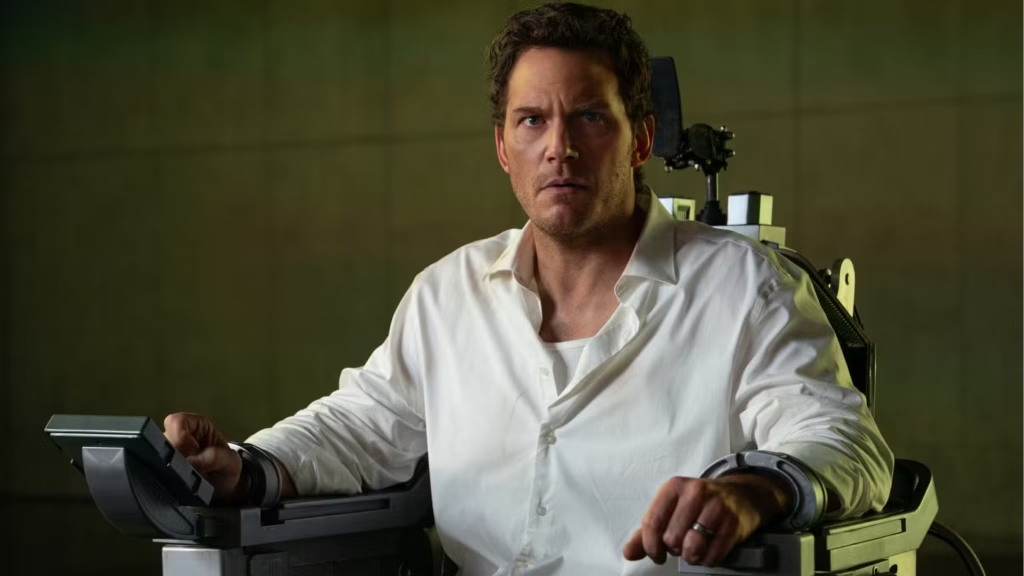
Violence & Intensity: There are shootings, physical fights, and tense pursuit sequences (including rooftop chases and high-speed hoverbike action). Characters are threatened with execution by the A.I. justice system, which creates a persistent atmosphere of dread. Some images of blood appear after acts of violence, though gore is not extreme. Emotional intensity is high: panic, desperation, and psychological pressure drive much of the film, and the idea of a machine deciding life or death can be unsettling, especially for younger teens.
Language: Strong language is used intermittently. Expect multiple uses of common profanities (including the F-word and S-word). The tone is often harsh and confrontational, especially during moments of crisis. No repeated use of slurs, but the dialogue reflects the gritty, stressed-out emotional state of the characters.
Sexual Content / Nudity: There are references to a strained marriage and emotional intimacy between spouses, but no explicit sexual scenes. No nudity. The relationship material leans more toward melancholy than sensuality.
Drugs, Alcohol & Smoking: The main character struggles with sobriety, and relapse is implied. Alcohol use is discussed and shown in context. There are references to addiction recovery, sponsors, and guilt around substance abuse. Teen smoking appears briefly. The material isn’t glamorized, but it is present and emotionally heavy.
Age Recommendations: While rated PG-13, Mercy feels best suited for older teens (15+) and adults. Younger viewers may find the themes of surveillance, execution, addiction, and psychological pressure confusing or distressing.
Mercy opens exclusively in theaters on January 23rd, 2026.
Highly Recommended: Killer Whale (2026) Parents Guide

Stephanie Heitman is a seasoned journalist and author dedicated to helping parents navigate the world of Hollywood entertainment through thoughtful, family-oriented film reviews. With over a decade of experience in writing and a passion for fostering safe, enriching viewing experiences, Stephanie launched Parentguiding.com to provide parents with the insights they need to make informed choices for their families.