If you’ve spent any real time with Scandinavian crime television what we’ve all come to shorthand as Nordic noir you can usually sense the contours of the story before the first body surfaces. There will be a detective weighed down by history, eyes permanently shadowed by regret. There will be a small, outwardly quiet town where something rotten has been festering for years. You expect mistreated kids, family secrets, money problems, and sooner or later, a corpse drifting in a river or pulled from cold water. The acting will be restrained to the point of frostbite, the camera will favor washed-out whites and muddy browns, and the plot will coil in on itself until you’re half-admiring the complexity and half-wondering if it’s all getting away from itself.
Netflix, which has already made itself quite comfortable in this chilly corner of television with series like The Åre Murders and Deadwind, kicks off the new year with another five-episode descent into gloom. The problem isn’t that Land of Sin wants to make you feel bad that’s part of the bargain it’s that, for seasoned viewers of the genre, it doesn’t seem to know how to do much else. There are very few surprises tucked up its sleeve.
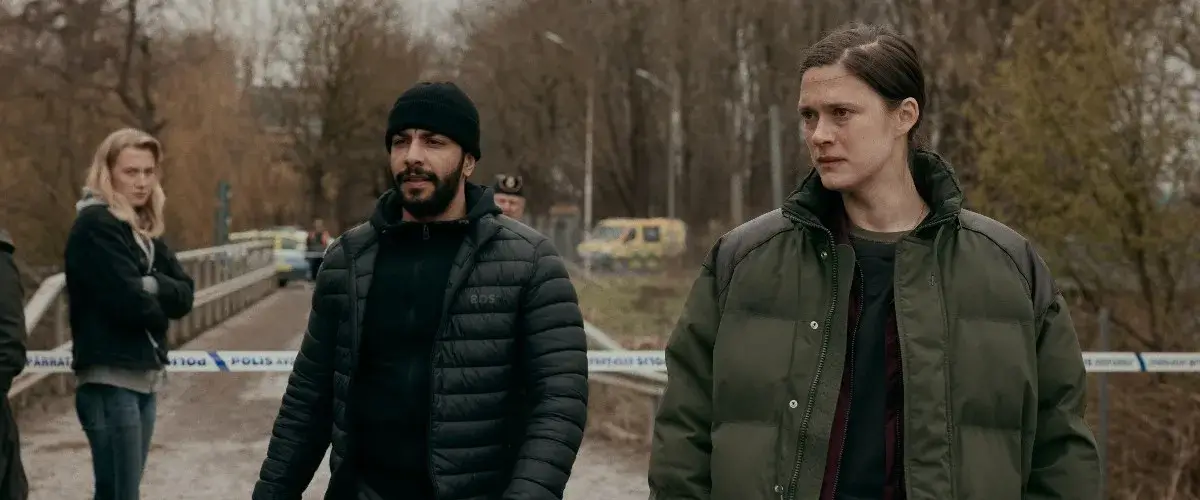
Created, written, and directed by Peter Grönlund who has navigated similar territory before with shows like Goliat and Beartown Land of Sin (or Synden, in its original Swedish) drops us into a familiar setup. A teenage boy has vanished in a rural farming town in the Scanian countryside. His father, Ivar, is dying, and with time running out, he reaches out to Dani, a police investigator who once lived there and left scars behind. Dani isn’t just any cop to this town: she once served as foster mother to the missing boy, Silas, and his biological parents have never forgiven her for taking him out of their care. Right away, the case is tangled up in history, resentment, and unspoken blame exactly the kind of emotional quicksand these stories thrive on.
Highly Recommended: The Monster of Florence (2025) Parents Guide
Dani herself is barely holding together. Estranged from her biological son, Oliver, and clearly running on fumes, she returns to Bjäre accompanied by Malik, a by-the-book trainee who still believes in procedure and clean lines. You can feel the old wounds reopening as soon as she steps back into town. What begins, on paper, as a missing persons investigation doesn’t stay that way for long. The inevitable turn toward murder forces Dani to confront not just her own past failures, but a community that already distrusts her and would rather keep its secrets buried than see justice done.
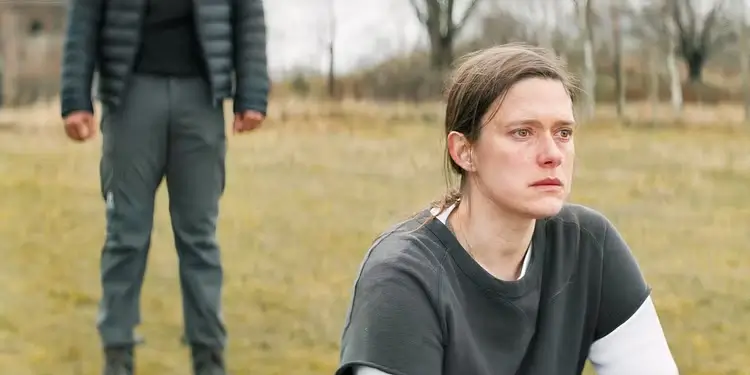
If any of this sounds familiar, that’s because it is. Anyone who’s watched a handful of Nordic crime dramas or even their English-language cousins like Broadchurch, Mare of Easttown, or True Detective will recognize the beats almost immediately. Dani, with her slumped posture, perpetually tired eyes, and messy ponytail, feels cut from the same cloth as Kate Winslet’s bruised Pennsylvania detective. Krista Kosonen, a veteran of this genre thanks to series like Bullets and Beforeigners, delivers the expected note of exhaustion and quiet despair. But Grönlund’s script doesn’t give her much room to maneuver. Dani is mostly asked to cycle through cynicism and pain, with little modulation. Malik, meanwhile, exists largely to remind her and us of the rules she’s breaking, both professionally and morally. As characters go, he’s less a person than a narrative speed bump.
Highly Recommended: The Great Flood (2025) Parents Guide
The one performance that truly cuts through the murk belongs to Peter Gantman as Elis, the family patriarch. Elis is also seeking justice for Silas, but he operates by a different, more personal moral code, rooted in blood ties and loyalty. Early on, he stands as an obstacle to Dani, a man whose interests seem at odds with hers. As the story unfolds, though, his role deepens and complicates, and you start to feel the weight he carries. Gantman’s lined face and measured, almost musical monotone give the character a gravity that grounds the show. In his scenes, the series’ suffocating atmosphere briefly coheres into something sharper and more affecting.
The bleakness of Land of Sin is, in a way, exactly what its title promises. This is a world of grief and anger, of people trudging through mud-slicked fields, swallowing tears they no longer have the energy to shed. The banjo-heavy score underscores not just the threat of violence, but the hostility of a town that bristles at outside scrutiny especially from a cop like Dani, whose past still lingers like a bad smell. The show piles on its thematic burdens: drug trafficking, grinding poverty, generational trauma, bitter disputes over land and money. These elements are meant to enrich the portrait of Bjäre, but instead they crowd the frame. Rather than deepening the stew, they flatten it, canceling each other out until the plot feels bloated and oddly inert.
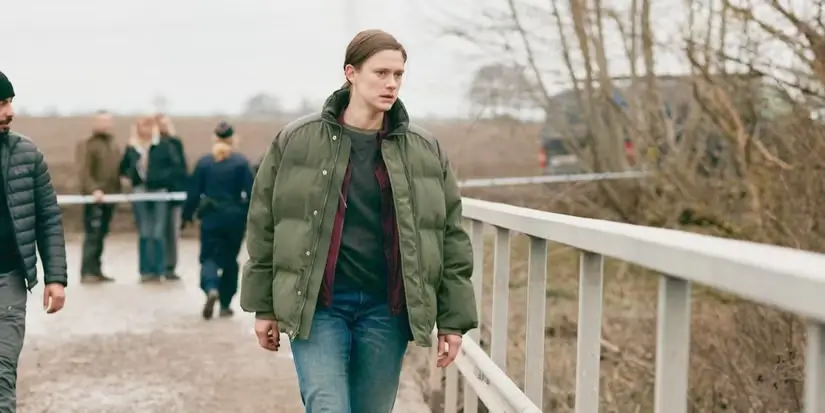
This kind of darkness is the currency of the genre, but watching it play out without relief across five episodes short as they are can be exhausting. There’s little variation in tone, no unexpected shift to give the story room to breathe. The efficiency of Netflix’s format means you can finish the entire series in under four hours, which is a blessing and a curse. A story this layered arguably needs more space and a steadier pace. Instead, we’re dropped into the middle of Dani’s emotional spiral, left to piece together the stakes largely through the exposition she feeds to Malik.
Highly Recommended: Spartacus: House of Ashur Parents Guide
By the time Land of Sin reaches its weary, almost apologetic finale, it’s difficult to argue for it over the many sharper, more inventive crime dramas already out there. For viewers steeped in the genre, it offers little beyond reheated variations on the well-worn “troubled cop returns to a small town to solve a murder” template. And for those new to Nordic noir, it’s hard not to wonder: why start here, when so many better versions of this story already exist?
Detailed Content Breakdown for Parents
Violence & Intensity: Violence in Land of Sin is rarely graphic, but it’s heavy in a way that can linger long after an episode ends. The series revolves around a missing teenager whose fate becomes increasingly grim, and much of the tension comes from conversations about death, abuse, and the emotional aftermath of violent acts rather than explicit imagery. When violence does occur, it’s framed seriously and without sensationalism. Still, the cumulative weight of murder, grief, and simmering hostility makes the experience intense, particularly for younger or more sensitive viewers. You can feel the pressure building episode by episode, with very little emotional release.
Language: The language throughout the series reflects its bleak worldview. Characters frequently speak in anger or frustration, and profanity is used as a natural extension of that emotional state rather than for shock value or humor. While there are no constant slurs or excessively graphic insults, the dialogue often carries a sharp, abrasive edge. Parents should expect regular strong language delivered in tense, confrontational situations.
Sexual Content & Nudity: Sexual content is not a major focus of Land of Sin. There is no explicit nudity, and physical intimacy is largely absent. However, the story does touch on adult relationships and past personal histories in subdued, serious ways. Any references to sexuality are tied to emotional trauma or complicated family dynamics rather than titillation, and they may still be uncomfortable given the show’s overall tone.
Drugs, Alcohol & Smoking: Alcohol use is common and often portrayed as a coping mechanism for grief, guilt, or stagnation. Characters drink in moments of despair or anger, and while it’s not glorified, it’s presented as a normalized part of life in this troubled community. Drug trafficking plays a meaningful role in the story, contributing to the town’s decay and sense of hopelessness. Substance use is treated realistically and critically, but its presence is frequent enough that parents should take note.
Recommended Age Range: Best suited for adults and older teens who are already comfortable with mature crime dramas like Broadchurch, True Detective, or Mare of Easttown.

Stephanie Heitman is a seasoned journalist and author dedicated to helping parents navigate the world of Hollywood entertainment through thoughtful, family-oriented film reviews. With over a decade of experience in writing and a passion for fostering safe, enriching viewing experiences, Stephanie launched Parentguiding.com to provide parents with the insights they need to make informed choices for their families.