Ramzi Bashour’s Hot Water is deceptively simple, a road-trip dramedy that sneaks in more complexity than it first appears to offer. It’s a story about a mother and son traversing the American landscape, yet beneath the rumble of tires and passing highways lies a meditation on family: the tensions and tenderness that define it, the inherited weight of generational history, and the fragile yet necessary art of communicating with those we love most. And, just as quietly profound, it asks whether starting over sometimes means leaving the life you thought you understood behind entirely.
It’s easy to imagine dismissing the premise as conventional, even syrupy but Bashour has a knack for layering his narrative with messy, human textures. Love and forgiveness are there, yes, but simmering just beneath is anger, frustration, and the small combustions of everyday life that quietly shape who we are. The film occasionally stumbles, hitting some familiar story beats, yet, like its protagonists, it keeps rolling forward, propelled by sincerity more than polish.
And then there’s the question of hockey equipment. Not metaphorical literal, cumbersome, maddening hockey gear. Bashour doesn’t shy away from the minutiae of family life, and here it becomes emblematic: the small irritations that can push us to the edge. Layal, the mother, reaches hers midway through the journey in a moment that’s equal parts hilarious and heartbreakingly human. Played with exquisite precision by Lubna Azabal, she flings the burden of her son Daniel’s gear in a mix of frustration and exhaustion, a gesture that speaks volumes about the limits of patience and love.
Highly Recommended: The Friend’s House Is Here (2026) Parents Guide
Daniel, played with his trademark deadpan charm by Daniel Zolghadri (fresh from last year’s If I Had Legs I’d Kick You), is the perfect counterpoint: a teenager teetering between carelessness and emerging responsibility. Their journey begins after Daniel’s violent altercation at a hockey game ejects him from school, prompting a cross-country drive from Indiana to Colorado, where they hope to reconnect with his father, Anton (Gabe Fazio). The plan is simple: Layal delivers Daniel, he spends time with Anton, and then continues to California to finish high school. Simple, of course, is never simple, and Bashour thrives in the complications that ripple across this ostensibly straightforward trip.
The story itself might not astonish in its architecture, but it’s in the minutiae that Hot Water truly breathes. From her first frame, Azabal establishes Layal as a fully realized human being—a person you feel could be someone in your own family. She’s an Arabic professor wrestling with quitting smoking, tender yet uncompromising, capable of both warmth and righteous critique. Zolghadri’s Daniel, by contrast, drifts with an easy-goingness that masks the looming responsibilities of adulthood. Watching them edge closer as the inevitable farewell approaches is quietly heartbreaking, a melancholy earned through patience and subtlety. You might recall the delicate balance of humor and heartbreak in A Real Pain, Bashour’s Sundance breakout a few years back, and see a similar sensibility here: joy and melancholy entwined, never forcing sentiment, always allowing it to emerge organically.
Pacing is where the film sometimes falters; certain scenes feel rushed, eager to reach the next plot beat rather than luxuriate in the quietness of their interactions. Yet its core is sturdy, anchored in Azabal and Zolghadri’s luminous performances. Cinematographer Alfonso Herrera Salcedo, who previously gave us the understated beauty of A Love Song (2022), finds quietly mournful compositions everywhere: Layal’s reflection flickering in a television screen, Daniel perched alone watching a video on his phone. Even in the broad, familiar expanse of open roads, diners, and lonely motels, there’s a painterly thoughtfulness in the way light and frame capture emotional truth.
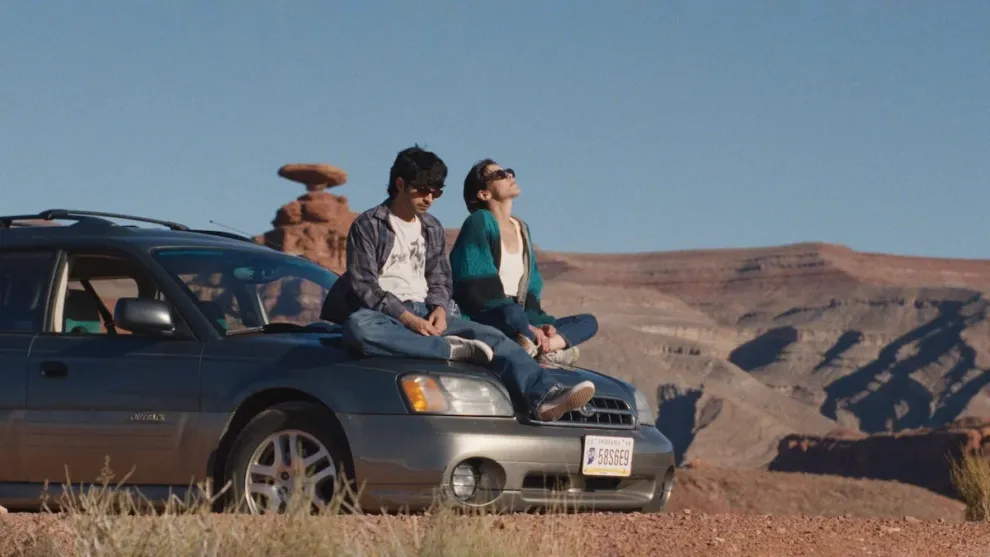
Some of the film’s most affecting moments happen when nothing much happens at all. On the hood of their modest Subaru Outback, a rare moment of vulnerability from Daniel lands with understated power. A motel receptionist, exasperated yet endearing, offers brief comedic relief, while a cameo by the incomparable Dale Dickey lingers, subtle and resonant reminding you how fleeting yet powerful small human connections can be.
Highly Recommended: All That’s Left of You (2025) Parents Guide
Sure, the road throws in predictable detours, flirting with clichés, but the central mother-son relationship keeps the film honest. Azabal and Zolghadri give us two people who, despite differences, mirror each other more than either might admit, carrying a quiet, believable tension that makes their eventual parting all the more poignant. Even when the story leans into a cheeky final reveal, the grace of Hot Water resides in these performances—the way they bare their characters’ souls so fully that we’d follow them anywhere. And yes, that includes enduring the nuisance of a monstrous hockey bag.
By the time the final credits roll, it’s hard not to feel like you’ve shared something deeply human. Bashour’s film doesn’t reinvent the wheel, but in its small, intimate gestures, in the quiet generosity of its performances, and in the honest reckoning with both love and irritation, it becomes a quietly luminous journey one you want to travel alongside, even if only for a fleeting cross-country road trip.
Hot Water (2026) Parents Guide
Violence & Intensity: The film contains mild physical confrontations, most notably a teenage hockey fight that sets the story in motion. There’s no graphic gore, but brief scuffles and tense arguments occur, reflecting realistic family frustration and adolescent rebellion. Emotional intensity is higher than physical action expect moments of anger, shouting, and heartfelt conflict between mother and son.
Language: The dialogue includes occasional profanity, some casual use of mild slurs, and a frank, realistic tone. The language is grounded in everyday conversation rather than being excessive or shocking, used mostly to convey frustration or humor in familial interactions.
Sexual Content / Nudity: Sexual content is minimal. There are brief references to teen relationships and mild innuendo, but no explicit sexual scenes or nudity. Any romantic or flirtatious content is subtle and largely peripheral to the main story.
Drugs, Alcohol & Smoking: Smoking is depicted in the context of the mother attempting to quit, and there are brief mentions of alcohol in passing. No drug use is shown, and these elements are presented naturally, without glamorization.
Age Recommendations: While not rated, the film is best suited for older children and teens (roughly 13+) due to emotional complexity, mild language, and realistic depictions of conflict. Younger children might find the family tension and some of the dialogue confusing or intense.
Highly Recommended: In Cold Light (2025) Parents Guide

Stephanie Heitman is a seasoned journalist and author dedicated to helping parents navigate the world of Hollywood entertainment through thoughtful, family-oriented film reviews. With over a decade of experience in writing and a passion for fostering safe, enriching viewing experiences, Stephanie launched Parentguiding.com to provide parents with the insights they need to make informed choices for their families.