From the moment you start paying attention to the supporting players in Best Medicine, it becomes clear that the show struggles with consistency both in how much agency it grants its characters and in how fully those characters are allowed to exist as people rather than punchlines. Take George and Greg, played by Jason Veasey and Stephen Spinella, the proprietors of the Salty Breeze diner. They’re fixtures of the town, yet the writing rarely gives them room to be anything beyond exaggerated, flamboyant caricatures. You can sense the actors reaching for texture, but the script keeps pulling them back into stereotype, flattening what could have been warm, lived-in presences into broad comic shorthand.
The same fate befalls Sheriff Mark, portrayed by Josh Segarra with an undeniable charm. On paper, Mark is the town’s lawman, theoretically a counterpart to Dr. Best as another public servant. In practice, he’s written as little more than the local fool, popping up mostly to irritate Martin rather than to meaningfully challenge or assist him. And yet, Segarra’s performance complicates this thin characterization. His wide-eyed enthusiasm and unmistakably earnest grin are so winning that it’s hard not to like him, even as you wish the show cared enough to give him something real to do.
Interestingly, some of the most minor figures fare better. Parents of sick children and a trio of recurring Gen Z teens are allowed small but vivid comic beats explaining gastrointestinal distress with childish sound effects, ribbing Martin for his painfully out-of-touch wardrobe choices. These moments are clearly meant to flesh out the town, to make Port Wenn feel bustling and alive. You can see the intention, feel the desire to create a communal texture. But more often than not, these scenes land with a thud, carrying the awkward timing and tonal uncertainty of a show still finding its footing. Instead of vibrant, they come off as undercooked, even amateurish.
Highly Recommended: Stranger Things’ Season 5 Vol. 1 Parents Guide
If there’s one element that consistently commands attention, it’s Josh Charles. Whenever he’s on screen, Best Medicine sharpens into focus. His Martin Best is the clearest echo of Doc Martin’s original success, and not by accident. From his first appearance, Charles communicates volumes through physicality alone: a rigid, almost militaristic posture set against the easy, open body language of the townspeople.

The contrast creates an immediate, almost tactile tension. Even before the show spells out his history, you instinctively understand this is a man profoundly uncomfortable with human connection and that landing in a village like Port Wenn is, for him, a kind of quiet horror.
Unlike many of the supporting roles, Martin is written with care, and Charles is given the space to explore the character’s emotional gradations. A standout example arrives early in the season during a dinner scene between Martin and Louisa, played by Spencer. It’s one of those rare moments where writing, performance, and intent align. As Martin recounts the personal tragedy that derailed his prestigious career and brought him back to this seaside town, the show briefly achieves the balance it’s been chasing. Spencer brings warmth and gentle understanding, the same empathetic presence that once made her so beloved on Suits. But it’s Charles who anchors the scene. He delivers the monologue with restraint, never fully letting his guard down. His jaw remains clenched, as if regretting the vulnerability even as it escapes him, yet his softened brow tells another story. The scowl fades, just enough. You see the hurt underneath, the loneliness, and it’s deeply affecting. In that moment, you don’t just understand Martin you feel for him. You might even want to reach out and comfort him, knowing full well he’d recoil at the gesture.
These flashes of emotional clarity suggest a show capable of weaving comedy and drama together with real finesse, much like Doc Martin before it. Unfortunately, they’re too rare to define the series as a whole. More often, Best Medicine gestures toward thematic depth without fully committing to it.
Highly Recommended: Fallout’ Season 2 Parents Guide
The show frequently toys with ideas of privacy, community, and cultural clash Martin’s big-city insistence on boundaries rubbing up against Port Wenn’s casual intimacy. Locals regularly cross lines he’d rather keep firmly drawn. A handyman lets himself into Martin’s home to fix a door without asking; neighbors offer help he neither wants nor requests. And yet, the show is careful to remind us that Martin isn’t heartless. As he dryly notes in the pilot, what he likes about people is “cutting them open and saving their lives.” It’s a darkly funny line, but it also rings true.
These conflicts often drive the middle acts of episodes, with Martin making unpopular medical calls that disrupt local traditions or activities, prompting the town to turn against him again and again. The problem is the repetition. The pattern becomes predictable, and the thematic weight starts to feel thin. Confrontations that should have lasting consequences dissolve by the final minutes, smoothed over with a single conciliatory line or half-hearted apology. Characters condemn Martin with surprising intensity, only to forgive him just as quickly, leaving little sense of growth or change on either side.
It’s as if Best Medicine can’t quite decide what it wants to be. Is it an exaggerated, cozy comfort show where conflicts reset each week? Or is it a gently melancholic comedy about a man who isolates himself from a community desperate to care for him? The show keeps straddling both impulses, and in doing so, never fully commits to either. Choosing one path and leaning into it would likely give the series the clarity it currently lacks.
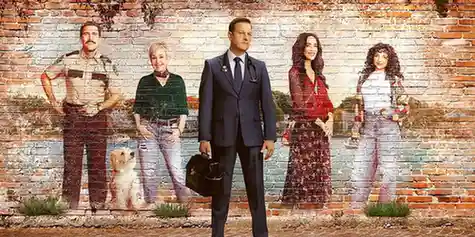
None of this makes Best Medicine a disaster. Far from it. There’s genuine goodwill baked into the show, along with likable characters, capable actors, and ideas worth exploring. But those strengths remain concentrated around Martin, Louisa, and Elaine, rarely extending outward to the rest of the ensemble in a meaningful way. In a series that relies so heavily on its community, that imbalance is hard to ignore. In the end, Best Medicine reaches for too much at once, and the strain shows. What’s left is a series with promise and heart but one that hasn’t yet learned how to make all its pieces work together.
Content Breakdown for Parents
Violence & Intensity: There is no physical violence. Medical procedures are discussed, occasionally shown in mild, non-graphic ways. Emotional confrontations can be tense but not frightening.
Language: Language is occasional and mild, including some sarcasm, blunt remarks, and brief profanity. Nothing extreme, but the tone may feel sharp or dismissive at times especially from Martin.
Sexual Content / Nudity: No nudity. Romantic tension is minimal and handled with restraint. Conversations about relationships are present but non-graphic and age-appropriate for teens.
Drugs, Alcohol & Smoking: Social drinking appears in community settings (dinners, gatherings). No drug use. Alcohol is not glamorized or central to the story.
Recommended Age Range: Best for ages: 13+. Teens and adults will better appreciate the humor, emotional nuance, and character-driven storytelling.

Stephanie Heitman is a seasoned journalist and author dedicated to helping parents navigate the world of Hollywood entertainment through thoughtful, family-oriented film reviews. With over a decade of experience in writing and a passion for fostering safe, enriching viewing experiences, Stephanie launched Parentguiding.com to provide parents with the insights they need to make informed choices for their families.