The film hasn’t received an official rating yet, but given its tone and intensity, a PG-13 feels almost certain. Viewers can expect bursts of stylized action, moments of eerie tension, and the kind of moody darkness familiar from Burton’s earlier Batman films — nothing overly graphic, but definitely not ideal for very young kids.
Batman: Revolution — A Return to Gotham’s Gothic Heart
It hardly needs repeating that Tim Burton’s Batman (1989) stands as a defining moment in cinematic superhero lore. Long before the age of interconnected universes and multiverse fatigue, Burton’s vision rescued the Dark Knight from the bright, campy shadow of the 1960s and reintroduced him as a creature of loneliness, trauma, and nocturnal obsession. Both Batman and its wintry sequel Batman Returns have aged into something almost mythic black-lacquered fairy tales of decay and duality and even three decades later, you’ll still hear people insist Michael Keaton is Batman. They’re not wrong.
Now, for those who still hear the echo of Danny Elfman’s theme in their heads, novelist John Jackson Miller (Batman: Resurrection, Star Wars: Kenobi) opens a new door back into that world. Batman: Revolution nestles itself neatly between Burton’s two films, imagining what Gotham endured in the interim. The city, as ever, is fracturing. Several new factions rise from its underbelly, each with their own brand of moral corruption or vigilante righteousness, and at the center of it all emerges a new figure a costumed mind obsessed with puzzles and riddles, a man who will test both Gotham’s fragile order and Batman’s resolve.
Highly Recommended: The Monster of Florence (2025) Parents Guide
Miller demonstrates an almost uncanny ability to tune into the specific frequencies of Burton’s characters. His Gotham is one of cigarette smoke, cathedral shadows, and grotesque humanity. Reporter Alexander Knox returns, as does the smarmy power broker Max Shreck and an ambitious Harvey Dent names that, for fans of Returns, will immediately spark recognition. The inclusion of Shreck in particular feels inspired. Reading Miller’s version, you can practically hear Christopher Walken’s slippery cadence curling around each line. The novelist captures that delicious mix of narcissism and menace the way Shreck could smile like a game show host while plotting the ruin of a city.
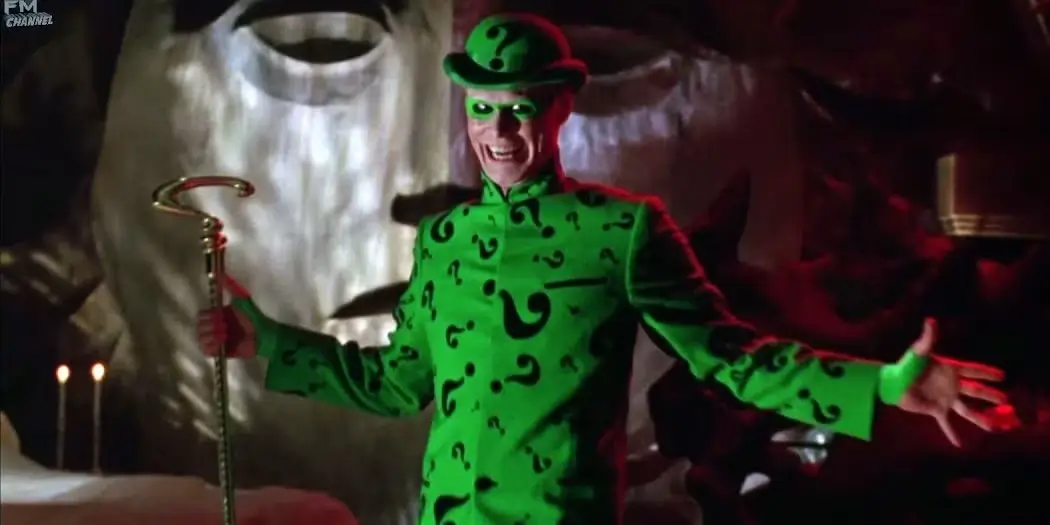
But the heartbeat of Revolution belongs to its Riddler a villain Burton himself never had the chance to bring to life. Though the character technically appears in Batman Forever, the tonal shift from Burton’s gothic surrealism to Schumacher’s neon spectacle makes it feel like a different universe. Miller’s Riddler feels born of the same DNA as Keaton’s Batman: haunted, wounded, and eerily human. You could imagine Jim Carrey dialed down into something tenderly tragic here, or even Paul Dano’s meticulous, socially awkward intensity. Yet this version of the Riddler isn’t sadistic or showy; he’s a quiet intellect beaten down by Gotham’s machinery of power. His descent from admiration to opposition is gradual and heartbreakingly plausible. You can feel his disillusionment building, the way hope curdles into resentment.
Also Read: In Our Blood (2025) Parents Guide
Keaton’s Batman, too, strides off the screen and onto the page almost effortlessly. Miller writes him with a filmmaker’s eye the imposing figure framed in silhouette, the haunted man beneath the mask still wrestling with the death of his parents and the unresolved thread of their killer. The Joker may have paid for his crimes in the first film, but Batman knows one accomplice still walks free, and that knowledge gnaws at him like unfinished business. Miller uses that emotional tension as the backbone of his story, deepening Batman’s partnership with Commissioner Gordon, his loyalty to Alfred, and even his uneasy cooperation with the Gotham police. There’s an intriguing exploration, too, of Bruce Wayne as Gotham’s most reluctant philanthropist a man whose wealth isolates him as much as it empowers him.
If all that sounds crowded, it is but deliberately so. Gotham has always been a city of excess, and Revolution embraces that. Alongside the Riddler, Batman finds himself facing a militant uprising determined to raze every form of corrupt authority, as well as two other recognizable foes from his rogues’ gallery. It’s a lot of moving parts, yet Miller juggles them with impressive control. The narrative never feels bloated; instead, it expands outward like one of Burton’s set pieces layered, ornate, but ultimately purposeful. By the time the third act arrives, the disparate threads converge in an exhilarating climax that rewards both the action and the emotional groundwork laid along the way.
Recommended: If I Had Legs I’d Kick You Parents Guide
The pacing breathes when it needs to. Miller knows when to linger in a character’s head when to let their motivations simmer, their fears articulate before plunging us into a fight or a riddle. Speaking of which, the Riddler’s games are handled with clever restraint: not just brainteasers for the sake of spectacle, but extensions of his psychology. The wordplay feels organic, the puzzles laced with emotion as much as intellect. You can sense Batman’s admiration, even empathy, for the man who might have been his ally in another life.
Ultimately, Batman: Revolution feels like both a love letter and a natural continuation of Burton’s Gothic dream. It honors the architecture the soaring spires, the theatrical moral contrasts while finding fresh emotional terrain within it. Miller’s grasp of tone is remarkable: his Gotham breathes with the same ornate melancholy that made the original films unforgettable. For long-time fans, his Easter eggs and subtle foreshadowing (linking threads to Returns and even the Batman ’89 comics) will feel like secret handshakes across time. But even newcomers who simply appreciate the brooding poetry of Burton’s vision will find much to savor here.
It’s rare to find a tie-in novel that feels genuinely cinematic that makes you hear the score swell and see the shadows move but Revolution achieves that. It’s not just an echo of nostalgia; it’s a story that earns its place in the myth.
Content Breakdown for Parents
Violence & Intensity: Burton’s Gotham has always been violent in a fairy-tale way elegant but eerie. Revolution continues that tradition. There are several fistfights, explosions, and chase sequences, plus moments of stylized gunfire. While not gory, the film leans into psychological tension: a few deaths occur off-screen or are implied through shadow. The Riddler’s traps occasionally place characters in peril, and Batman’s interrogations can be intimidating. Sensitive children might find some scenes intense, especially during the Riddler’s puzzles or mob confrontations.
Language: Mild to moderate profanity appears throughout. Expect a handful of uses of “hell,” “damn,” and a few stronger exclamations. The tone overall is serious and moody rather than crude or comedic language serves tension more than shock value.
Sexual Content / Nudity: Romantic subtext and flirtation exist but are mild. Bruce Wayne briefly interacts with a potential love interest, though nothing beyond a few suggestive glances and one chaste kiss. No nudity, and sexual themes are minimal.
Drugs, Alcohol & Smoking: Several characters including Gotham’s elites are seen drinking at social functions. Shreck and other high-society figures are often depicted with champagne or cigars, reinforcing the city’s moral decadence. There’s no drug use, and alcohol is portrayed as part of the corrupt world Bruce seeks to reform.
Parental Concerns
Parents should be aware that this is not a light superhero romp. The film is atmospheric, occasionally grim, and emotionally heavy. The tone and visuals may unsettle sensitive viewers, and the pacing reflective rather than frenetic might bore younger audiences expecting Marvel-style spectacle.
There’s also a melancholic streak that may feel sad or introspective, especially regarding Bruce’s trauma and the Riddler’s tragic backstory.
Rating: 8/10.

Stephanie Heitman is a seasoned journalist and author dedicated to helping parents navigate the world of Hollywood entertainment through thoughtful, family-oriented film reviews. With over a decade of experience in writing and a passion for fostering safe, enriching viewing experiences, Stephanie launched Parentguiding.com to provide parents with the insights they need to make informed choices for their families.