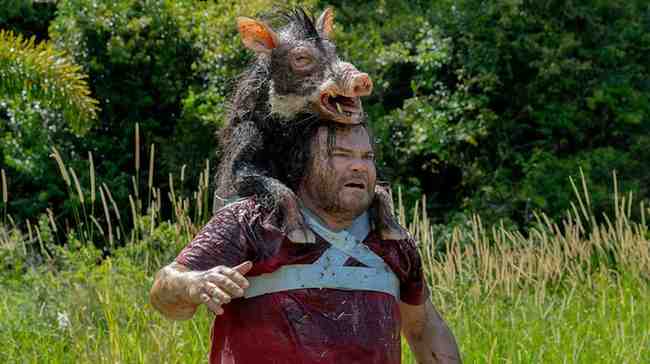
Anaconda is Rated PG-13 by Motion Picture Rating (MPA) for violence/action, strong language, some drug use and suggestive references.
Don’t think of this Anaconda as a remake. Don’t try to file it away as a sequel, or even a reboot. Those labels feel too tidy, too familiar. Tom Gormican’s Anaconda exists in a stranger, slipperier space something you haven’t quite seen before, and yet something that’s unmistakably tethered to a movie you probably remember all too well: the 1997 jungle oddity that paired Jennifer Lopez and Ice Cube with a very large, very hungry snake.
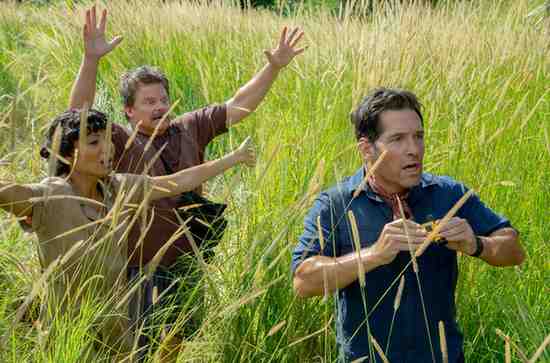
Gormican, who also co-wrote the film, sets his story in a reality where that original Anaconda is a real movie one that has lodged itself deep into the hearts of two childhood best friends. Griff (Paul Rudd) and Doug (Jack Black) grew up loving it, and now, as adults staring down the quiet disappointments of their own lives, they’ve decided to remake it themselves. Not with studio backing or technical polish, but with duct tape, optimism, and a stubborn belief that art can still save them. So they head into the Amazon on a rickety boat, joined by old friends Kenny (Steve Zahn) and Claire (Thandiwe Newton), chasing a half-formed dream. Inevitably almost poetically they end up hunted by a real anaconda.
It’s a funny idea. For a while, it’s even a clever one.
And then, slowly, it stops being either.
The film occupies the same self-aware terrain Gormican explored with co-writer Kevin Etten in The Unbearable Weight of Massive Talent, where Nicolas Cage played a heightened version of himself riffing on his own career. That movie’s pleasure came from its meta-audacity and its affectionate mockery of Hollywood excess. Anaconda borrows that approach, leaning into industry jokes and reflexive commentary that will delight some viewers and sail cleanly over the heads of others. Early on, there’s a loose, manic energy to the whole thing, the sense that the movie is happily amused by its own existence. You can feel it crackling at first. But it’s an energy the film simply can’t hold onto.
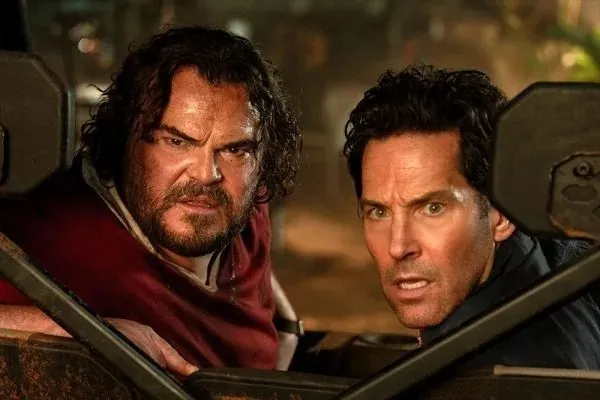
Part of the problem is tonal. The 1997 Anaconda was unapologetically ridiculous and seemed to understand exactly how ridiculous it was. This new version begins with that same winking silliness especially when it’s focused on the laughably bad movie-within-the-movie, where atrocious dialogue and wooden performances are treated as acts of pure, unearned genius by the people making them. Those stretches are reliably funny, fueled by the painful sincerity of artists who think they’re creating something monumental.
But at some point, the movie decides it wants to be taken seriously. It grows earnest. And once that happens, it loses its grip.
Griff and Doug are, on engaging pair. Griff fled to Los Angeles, clinging to dreams of stardom and taking himself very seriously as an actor, even as his career stalls out in forgettable TV roles. Doug stayed behind in Buffalo, channeling his creative impulses into wildly overproduced wedding videos that are funny because they’re so deeply heartfelt. This ill-advised Anaconda remake becomes their last shot at rewriting the story of who they thought they’d be. You can sense the emotional logic there the ache of unfinished ambition, the need to prove something to yourself before time runs out.
Rudd and Black sell that history beautifully. Their banter has an easy rhythm, and their shared affection makes the friendship feel lived-in rather than scripted. If you remember Walk Hard: The Dewey Cox Story, there’s even a nostalgic echo of their deliberately awful Beatles parody two performers who know exactly how to play incompetence with precision.
Unfortunately, the rest of the ensemble isn’t given nearly as much to do. Zahn’s Kenny is reduced to a dim-witted punchline, good for the occasional chuckle but little else. And Newton, an actor of immense range and presence, is astonishingly underused. She plays Claire, Griff’s long-ago crush and the star of their childhood home movies, now a divorced lawyer. That single biographical note more or less defines her entire character, which feels like a waste bordering on negligence.
As the film shifts gears into full-blown action complete with chase sequences, explosions, and gunfire it starts to resemble just about any other glossy adventure movie. The rough charm drains away, replaced by a slick anonymity that’s hard to care about. A subplot involving the boat’s captain (Daniela Melchior) and a group of illegal gold miners clutters the narrative without adding much texture or tension. Griff and Doug frequently talk about “themes” and “stakes,” tossing around screenwriting jargon as though saying the words might conjure meaning. But when the actual danger arrives, it never quite feels weighty enough to justify the rhetoric.
Then there are the cameos. One genuinely inspired appearance already spoiled by the trailers lands well enough. But another, near the end, is so painfully unfunny it almost stops the movie cold. You might find yourself blinking at the screen, wondering how no one involved realized how badly it misfired. A mid-credits scene follows, unnecessary and inert, as if included out of obligation rather than inspiration.
And yet.
If what you came for was a giant snake wreaking havoc, the movie does deliver. The anaconda itself has received a major upgrade from the charmingly clunky effects of the ’97 original. This version slithers with digital confidence, its movements smoother, its presence more imposing. At times, you might even swear there’s a mischievous glint in its eye.
At the very least, the snake seems to be enjoying itself.
And maybe, in the end, that’s the most honest performance in the film.
Content Breakdown for Parents
Violence & Intensity: There are frequent scenes of snake attacks, characters being chased, restrained, or threatened, and moments of peril involving boats, weapons, and explosions. While there’s no graphic gore, the danger feels real enough to be intense, especially for younger or sensitive viewers. The anaconda itself is large, aggressive, and visually detailed, which may unsettle some kids.
Language: The dialogue includes frequent strong language, including multiple uses of profanity (notably the f-word), along with crude jokes and sarcastic insults. The tone is comedic but very adult at times, leaning into the characters’ frustration and immaturity.
Sexual Content / Nudity: There’s no nudity, but there are suggestive references, innuendo, and occasional crude jokes, mostly played for laughs rather than titillation. Romance is minimal and understated.
Drugs, Alcohol & Smoking: Some drug references and brief usage appear, largely in a casual or comedic context. Alcohol is present socially. None of this is glamorized, but it’s noticeable enough for parents to flag.
Scary or Disturbing Scenes: The snake attacks are designed to thrill, not traumatize, but younger teens might still find certain moments stressful especially scenes involving surprise attacks or characters trapped with the creature. The film’s shift from comedy to real danger can feel abrupt, which may heighten tension.
Parental Concerns: What might surprise parents is the tone shift. The movie starts out goofy and self-aware but becomes more earnest and action-heavy as it goes, which may catch families off guard. The humor is aimed squarely at adults, and the language alone makes this a poor fit for younger kids.
Overall: Suitable for teens and adults, best enjoyed with context, expectations managed, and maybe a quick pre-movie chat about language and intensity.
Highly Recommended:

Stephanie Heitman is a seasoned journalist and author dedicated to helping parents navigate the world of Hollywood entertainment through thoughtful, family-oriented film reviews. With over a decade of experience in writing and a passion for fostering safe, enriching viewing experiences, Stephanie launched Parentguiding.com to provide parents with the insights they need to make informed choices for their families.