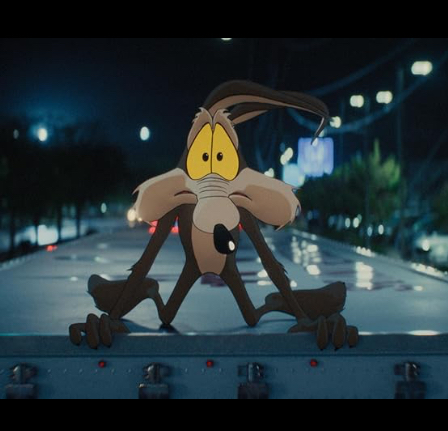
Yes. This is one of the easiest calls I have had to make all year, and here is the single reason: Coyote vs. Acme is a slapstick animated comedy built squarely on the Looney Tunes tradition of cartoonish chaos, courtroom laughs, and a surprisingly big heart. If your child can handle a cartoon anvil falling on a coyote’s head — and let’s be honest, generations of kids have — they will be fine here.
I want to give you the full picture though, because this Coyote vs. Acme parents guide exists precisely for the things a trailer cannot tell you. The film has a longer emotional throughline than you might expect from a Wile E. Coyote movie. There is a streak of genuine sadness running underneath the gags, and for some younger or more sensitive viewers, that matters more than the cartoon violence ever will.
Let me walk you through everything.
Quick-Scan Safety Card
| Category | Detail |
|---|---|
| Official Rating | Not Yet Rated — expected PG for cartoon action and mild language |
| Expert Recommended Age | 5+ (younger children may find emotional beats intense) |
| Violence | Frequent cartoon slapstick — explosions, falls, anvils, rockets. Exaggerated and played for laughs. Nobody is realistically hurt. |
| Language | Very mild — occasional words like “darn” or “heck.” No profanity. |
| Emotional Intensity | Themes of repeated failure, loneliness, and feeling discarded. Wile E. Coyote’s frustration carries real weight. |
| What Will Surprise Parents Most | How genuinely moving it is. The courtroom structure gives the Coyote unexpected emotional depth. |
What Is Coyote vs. Acme About — No Spoilers
Picture this: Wile E. Coyote has finally had enough. After decades of buying faulty products from the Acme Corporation — rockets that explode in his face, giant magnets that attract the wrong things — he hires a down-on-his-luck lawyer and sues the company.
That is the setup, and it is funnier than it has any right to be. But underneath the courtroom comedy and the brilliantly staged slapstick sequences, there is a real story about a character who has been knocked down countless times and has to decide whether to keep getting up.
My youngest, who is seven, laughed at every single visual gag. My twelve-year-old got quieter during the scenes where Wile E. sits alone in his desert cave. Same film. Two completely different emotional experiences. That is what I would want another parent to know before watching.
Why Is It Rated Not Yet Rated?
As of this writing, the Coyote vs. Acme age rating has not been officially confirmed by the MPAA or the BBFC. Based on the content, I am confident this will land at PG — or a U or PG from the BBFC for UK audiences.
Here is why: the violence is entirely cartoon slapstick. Think classic Road Runner shorts but with a bigger budget and more elaborate set pieces. There are explosions, falls from cliffs, contraptions malfunctioning spectacularly. None of it is realistic. None of it produces real injury.
If anything, I think PG might be slightly cautious for this one. The language is squeaky clean. There is no sexual content whatsoever. The strongest element is emotional intensity, and even that is handled with warmth rather than heaviness. A G rating would not have shocked me, frankly.
Cartoon Violence and Slapstick
This is the bread and butter of the film. Wile E. Coyote gets flattened, launched, exploded, and dropped from ridiculous heights in sequence after sequence. The courtroom scenes include flashback evidence of Acme product failures, each one staged as an elaborate Rube Goldberg catastrophe.
One sequence I particularly remember involves a rocket-powered roller skate that takes Wile E. through a canyon at absurd speed before depositing him into the side of a mesa. It is hilarious. It is also completely bloodless and physically impossible, which is exactly the point.
The slapstick here is crafted with real skill. It escalates brilliantly and the timing is genuinely sharp — this is not lazy cartoon violence, it is carefully constructed comedy that happens to involve a lot of falling anvils.
If your child has watched any classic Looney Tunes, Tom and Jerry, or similar cartoon slapstick without distress, the violence here will be completely familiar territory. The animation quality is higher but the principle is identical.
Emotional Themes and Sadness
This caught me off guard more than anything else. Wile E. Coyote is given the ability to speak in this film, and with that voice comes a character who can articulate his loneliness and frustration. There are quiet moments — brief, but present — where he reflects on years of failure.
The human lawyer character mirrors this arc. He is a man whose career has crumbled, who is trying to prove he still has value. The parallel between the two is drawn gently but clearly.
I found myself unexpectedly moved. My kids did not cry, but they noticed the shift in tone during those scenes. Younger children (under five) may not follow the emotional thread, which honestly works in their favour — they will just enjoy the explosions.
Children who are currently struggling with feelings of failure — in school, sports, friendships — may connect strongly with Wile E.’s story. That is not a reason to avoid the film. It might actually be a reason to watch it together.
Language and Humour
The language is remarkably clean. I noticed a couple of mild expressions — “darn,” “heck,” one instance of “oh crap” that flew past so quickly I nearly missed it. No slurs, no profanity, nothing approaching crude humour.
The comedy is physical, absurdist, and occasionally quite clever in its courtroom satire. Some of the legal jokes will sail over younger heads entirely, which is fine. They will be too busy laughing at the exploding catapults to notice.
The humour is family-friendly across the board. There are no innuendos pitched at adults over children’s heads — a refreshing change, honestly, from a lot of recent animated fare.
Scary or Intense Moments
There are a handful of sequences where the stakes feel briefly real. One chase scene through a factory is loud and fast-paced, with machinery that could feel overwhelming on a big screen for very small children.
There is also a moment near the climax where it appears Wile E. might lose everything — his case, his home, his sense of purpose. It is resolved quickly and warmly, but in the moment, it carries weight. My seven-year-old squeezed my hand during that scene. Five minutes later she was laughing again.
If your child is sensitive to characters being sad or feeling hopeless, give them a gentle heads-up that the Coyote has some tough moments but that the story has a happy resolution. That small bit of reassurance goes a long way.
Age-by-Age Viewing Guide
Toddlers and preschoolers will enjoy the bright animation and physical comedy, but the film runs at a standard feature length and the courtroom scenes may bore them. The emotional subplot will go over their heads — which actually shields them from the heavier beats. The factory chase scene could be loud and visually intense for very sensitive little ones. Fine for most four-year-olds who are used to cinema experiences, but I would not call it essential viewing for this age group.
This is the sweet spot. Children in this range will follow the story, laugh at the slapstick, and pick up on the emotional beats without being overwhelmed by them. The courtroom framing device gives just enough structure to keep older primary-school children engaged between the action sequences. My seven-year-old declared it “the best Coyote thing ever,” which feels like the target audience speaking.
Pre-teens and young teenagers will appreciate the cleverness of the comedy and the emotional depth more than younger viewers. Some may find it “too young” for them — that will depend entirely on the individual child. But the legal satire and the genuine warmth of the story give it enough substance to hold the attention of a discerning twelve-year-old. Mine was engaged throughout.
No content concerns whatsoever. The question for this age group is not safety but interest. Teenagers who enjoy animation, Looney Tunes nostalgia, or smart comedy will have a good time. Those who are deeply committed to appearing grown-up might resist it. Their loss, honestly — this is a genuinely well-crafted film.
Adults will likely enjoy this more than they expect. The animation is gorgeous, the comedy is sharply timed, and the emotional core is real enough to land with grown-ups who have ever felt like they keep failing at the same thing. It is a family film that earns its place as a family film.
Positive Messages and Educational Value
I will be honest — nobody is going to mistake this for a documentary. But the messages woven through the story are genuine and land without feeling preachy.
Persistence in the face of failure is the central theme, and it is handled with surprising nuance. Wile E. does not simply try harder. He tries differently. He asks for help. He finds his voice — literally. That progression is worth more than a dozen inspirational posters.
There is also a quiet thread about accountability — the idea that companies should be responsible for the products they sell. Whether a six-year-old picks up on consumer rights is debatable, but the seed is planted in an entertaining way.
The friendship between Wile E. and his lawyer carries a lovely message about unlikely partnerships and believing in someone when nobody else does. It is earned rather than forced, which makes it effective.
Five Family Discussion Questions
- Wile E. Coyote kept buying Acme products even though they always failed. Why do you think he kept going back? Have you ever kept trying something that was not working?
- The lawyer almost gave up on the case before it was finished. What changed his mind, and what does that tell us about giving up versus stepping back?
- Do you think Acme should have been held responsible for their faulty products? What would you do if you bought something that did not work the way it was supposed to?
- Wile E. could not speak in the old cartoons but can talk in this film. How did hearing his actual thoughts change the way you felt about him?
- The Road Runner appears but does not speak and is not the villain in this story. Did that surprise you? Who do you think the real “bad guy” of the film is?
Frequently Asked Questions
Probably not, but it depends on your child. The slapstick violence is classic cartoon fare and not realistic. One factory chase scene is loud and fast-paced, which could startle sensitive preschoolers. The emotional beats are more likely to bore than frighten this age group.
Based on the Looney Tunes tradition, expect at least a short gag after the credits — likely a classic “That’s All Folks” riff with a twist. It is worth staying for the laugh, but it will not set up a sequel or contain essential plot information.
Animated films with explosions and action sequences often include brief flashing effects. I noticed a few rapid light changes during explosion gags. If your child has photosensitivity or epilepsy, check with your cinema for their accessibility notes before attending.
The Coyote vs. Acme streaming age limit and platform have not been fully confirmed for the UK as of writing. The film is expected to receive a theatrical release on 21 August 2026. Streaming availability — likely on a Warner Bros. platform — should follow after the cinema window.
Yes. This is a significant departure from the classic cartoons. Wile E. Coyote speaks throughout the film, particularly during the courtroom scenes. It works surprisingly well and gives the character an emotional dimension he has never had before.
There are a few scenes where Wile E. expresses loneliness and frustration that could affect empathetic children. These moments are brief and always followed by warmth or comedy. The ending is satisfying and uplifting. A gentle heads-up beforehand should be enough for sensitive viewers.
It is a hybrid. The animated characters — Wile E. Coyote, Road Runner, and other Looney Tunes favourites — interact with live-action human characters and real-world environments. The blend is handled well, similar to films like Space Jam or Paddington in execution.

Stephanie Heitman is a seasoned journalist and author dedicated to helping parents navigate the world of Hollywood entertainment through thoughtful, family-oriented film reviews. With over a decade of experience in writing and a passion for fostering safe, enriching viewing experiences, Stephanie launched Parentguiding.com to provide parents with the insights they need to make informed choices for their families.