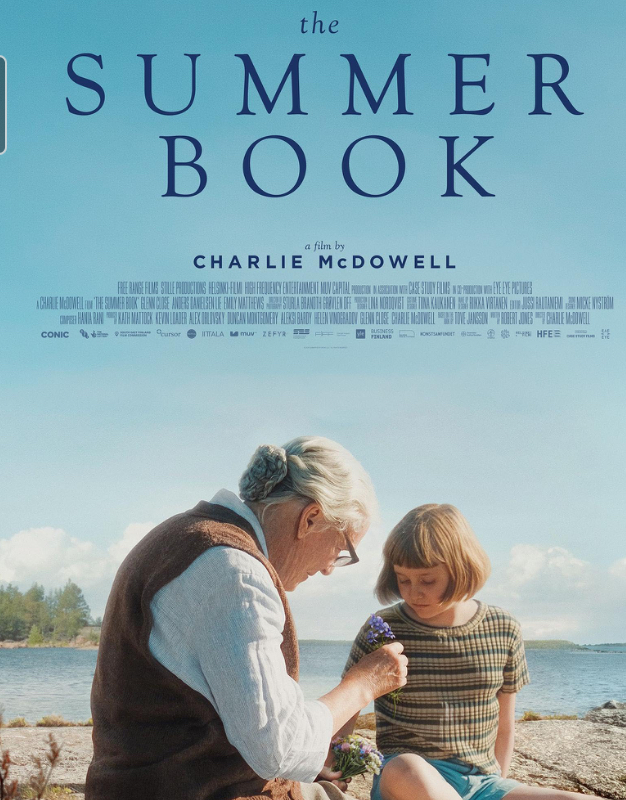
Is The Summer Book Safe for Kids?
Is The Summer Book appropriate for my child? I have been getting that question constantly since the trailer dropped, and here is my honest answer: yes, for most children aged eight and above, but the emotional weight of this film is heavier than its gentle exterior suggests. Here is everything behind that answer.
Quick-Scan Safety Card
| Category | Detail |
|---|---|
| Official Rating | Not Yet Rated (expected PG or U/PG equivalent in the UK) |
| Expert Recommended Age | 8+ (younger with parental co-viewing) |
| Violence | Minimal — no physical conflict; one brief depiction of a dead bird |
| Language | Clean — no profanity; occasional mild frustration expressions |
| Emotional Intensity | High — sustained themes of mortality, loneliness, and loss of a parent |
| What Will Surprise Parents Most | How deeply the grandmother’s declining health affects the emotional atmosphere — it is not a subplot, it is the whole texture of the film |
What Is The Summer Book About — No Spoilers
Picture this: a tiny Nordic island, a six-year-old girl named Sophia, and her ageing grandmother. That is essentially the whole cast and the whole setting. Sophia’s mother has recently died, though the film never shows this directly.
Instead we feel her absence in every frame. The grandmother and Sophia spend a long northern summer exploring tide pools, arguing about flowers, telling stories, and figuring out how to love each other across a gulf of seventy years.
Her father is present but emotionally distant, quietly working through his own grief in the background. What makes this film land so hard is its patience. It trusts silences. It trusts children to feel complicated things without spelling them out.
If your child has experienced loss — or even just noticed that grandparents grow older — this film will resonate in unexpected ways.
Why Is It Rated Not Yet Rated?
As of this writing, The Summer Book has not received an official MPAA or BBFC rating. Based on the source material and what I’ve seen, I would expect a PG rating from the BBFC — possibly even a U — and a PG from the MPAA.
Here is where I’d push back on a simple U classification. The emotional content here is genuinely complex. There are no jump scares, no violence, no language concerns. But the sustained presence of death — the dead mother, the grandmother’s fragility, a bird’s carcass on the beach — creates an atmosphere that sits in the chest.
A U rating might suggest this is breezy family fare. It is not. It is beautiful, but it asks children to sit with uncomfortable feelings. That distinction matters, and I think parents deserve to know it before pressing play.
Content Breakdown
Death, Grief, and Loss
This is the core of the film, and it is handled with remarkable restraint. Sophia’s mother is never seen. She died before the story begins, and nobody delivers a monologue about it.
Instead, grief shows up in the small moments — Sophia snapping at her grandmother without understanding why, or asking a question about heaven and then immediately changing the subject. My youngest, who is nine, picked up on those beats faster than I expected. She asked afterwards, “Why didn’t Sophia just talk about her mum?” That question alone was worth the watch.
The grandmother’s own mortality is also present throughout. She moves slowly. She naps often. In one scene she stumbles while climbing rocks and the camera holds on Sophia’s face — that split-second terror of realising the people you love are breakable.
If your child has recently lost a family member or is anxious about elderly relatives, preview the film first. It handles death beautifully but does not soften it, and there is no triumphant resolution to the grief — it simply continues, the way real grief does.
Nature and Minor Animal Death
Much of the film takes place outdoors, which is gorgeous. But there is a scene involving a dead bird that Sophia discovers on the beach. She picks it up, examines it, asks questions about what happens to bodies.
It is clinical rather than distressing, but for very young or animal-sensitive children, it may catch them off guard. The grandmother handles it matter-of-factly, which I appreciated — no sugarcoating, no melodrama.
The dead bird scene lasts roughly two minutes. If your child is particularly sensitive to animal death, knowing when it comes can help. It appears in what feels like the second act, during a beach walk.
Intergenerational Conflict
Sophia and her grandmother argue. A lot, actually. Not in a dramatic, raised-voices way — more in the stubborn, petty, genuinely funny way that grandparents and grandchildren really do butt heads.
There is one exchange about a flower that made me laugh out loud because I have had that exact argument with my own mother. Children watching might feel validated seeing that it is normal to find the people you love most deeply annoying sometimes.
These conflicts are all resolved gently and could be a helpful reference point if your child struggles with frustration toward older family members. None of the arguments escalate beyond what a typical family would recognise.
Emotional Tone and Pacing
I need to be frank here: this film is slow. Deliberately, purposefully, beautifully slow. But slow enough that children under seven or eight will likely lose interest entirely.
There are long stretches where almost nothing happens except light on water and quiet conversation. My eleven-year-old was captivated. My seven-year-old wanted to know when the story was going to “start.” That is not a flaw in the film — it is information you need before deciding who in your household watches it.
Manage expectations about pacing. If your child enjoys action-driven stories, this will be a challenging sit. If they respond to character-driven, atmospheric storytelling — or if you want to introduce them to that kind of film — this is an excellent choice.
Age-by-Age Viewing Guide for The Summer Book
Children this young will not engage with the slow, dialogue-driven pacing, and the themes of death and grief are too abstract for them to process meaningfully. There is nothing frightening here, but there is nothing to hold their attention either. Save this one for when they are older.
This is the age range where it gets individual. A mature, emotionally curious eight-year-old who enjoys quieter stories could find this deeply engaging. A restless six-year-old will be bored within twenty minutes. The grief themes are present but not graphic, and a co-viewing adult can help process them. I would say eight is the sweet spot for most children in this bracket.
This age group is well placed for The Summer Book. Pre-teens are beginning to understand mortality in more concrete terms, and this film meets them where they are without being manipulative. My eleven-year-old found it quietly powerful. Expect thoughtful questions afterwards rather than during the viewing.
Teenagers who appreciate artistic filmmaking will connect with the visual storytelling and understated performances. Some may find the pace too slow if they are not accustomed to European cinema. But those who stay with it tend to find something genuinely moving. No content concerns whatsoever for this age group.
Fully appropriate and honestly one of the best films to share across generations. If you have ageing parents yourself, be warned — it will hit you harder than it hits your kids. I watched it and immediately wanted to call my mother.
Positive Messages and Educational Value
The strongest message in The Summer Book is that love does not require perfection. Sophia and her grandmother frustrate each other constantly, and yet the bond between them is the most real, lived-in family relationship I have seen on screen in years.
There is also real value in how the film handles nature. Sophia’s curiosity about the island — its insects, plants, tides — is infectious. Children who watch this may want to go outside and actually look at things, which frankly feels like a radical act in 2026.
From an educational standpoint, the film quietly models emotional intelligence. Nobody lectures Sophia about her feelings. She is allowed to be angry, confused, and curious without correction. That is a powerful thing for a child to witness.
Five Family Discussion Questions
- Sophia never directly talks about missing her mother. Why do you think she avoids it, and do you think her grandmother notices?
- When Sophia finds the dead bird on the beach, she asks what happens next. What would you have said to her if you were the grandmother?
- Sophia and her grandmother argue about small things like flowers and swimming. Do you think those arguments are really about flowers and swimming — or something else?
- The father spends most of the summer working inside the cabin. How do you think his grief is different from Sophia’s? Is one way better?
- The film ends with summer ending. Why do you think the filmmakers chose to stop there instead of showing what happens next?
Frequently Asked Questions
There is nothing conventionally scary — no monsters, no violence, no loud moments. The only fear present is existential: the quiet awareness that people grow old and die. For children under seven, this is unlikely to register. For sensitive older children, it might linger.
No official BBFC rating exists yet for this 2026 release. Based on the content, I expect a PG classification. There is nothing that would push it to 12A. The emotional themes are the only reason it would not receive a U.
No. The film ends cleanly with the close of summer, and the credits roll over ambient island sounds. There is no additional scene or teaser after the credits finish. You can leave when the credits start.
No. The film uses entirely natural lighting throughout and there are no sequences involving strobe effects, rapid flashing, or high-contrast visual patterns. It should be safe for viewers with photosensitive conditions.
The Summer Book is set for a UK theatrical release on 7 July 2026. Streaming details have not been confirmed yet. Check back closer to release for updates on The Summer Book streaming age limit and platform availability.
Yes, it is adapted from Tove Jansson’s 1972 novel of the same name. The book is widely read by children aged nine and above in Scandinavia. It contains the same themes of grief and ageing but is beautifully accessible for younger readers.
Sophia’s mother has already died before the story begins. No character dies on screen during the film. The grandmother’s age and frailty create an underlying tension that she might not always be there, but the film does not depict her death.

Stephanie Heitman is a seasoned journalist and author dedicated to helping parents navigate the world of Hollywood entertainment through thoughtful, family-oriented film reviews. With over a decade of experience in writing and a passion for fostering safe, enriching viewing experiences, Stephanie launched Parentguiding.com to provide parents with the insights they need to make informed choices for their families.