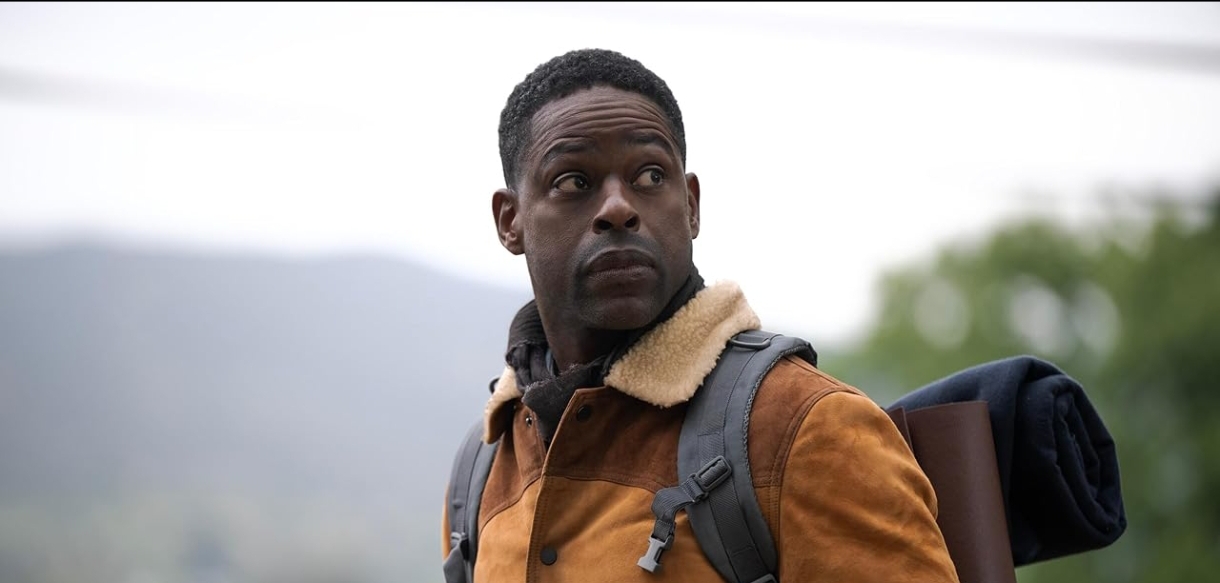
Is Paradise safe for kids? Mostly for teens. There are intense sci-fi action scenes and some mature themes.
Is it worth watching? Absolutely. If you like smart science fiction with emotional depth, this is one of the strongest shows of 2026.
Age Rating: TV-14 recommended 14+ with parental guidance
Why everyone’s talking about it:
- Stunning world-building
- A mystery that keeps twisting every episode
- Strong performances that make the science feel human
- One finale that will have you pausing the screen and saying, “Wait… WHAT?
The bottom line: Paradise blends high-concept science fiction with deeply human drama. I watched the first three episodes in one sitting on a rainy weekend with my teenage nephew. By episode two, we were both leaning forward, trying to predict the next twist. Neither of us got it right.
And that’s part of the magic.
What Is Paradise About?
At its core, Paradise asks a deceptively simple question:
What would humanity sacrifice to survive?
The series takes place in a seemingly perfect colony world known as Paradise, built after Earth began collapsing under climate disasters and political chaos. The colony promises safety, clean cities, advanced technology, and a fresh start.
But here’s the thing.
Perfect societies rarely stay perfect.
Underneath the glowing skylines and carefully controlled climate domes lies something darker secrets about who was allowed into Paradise… and who was left behind.
Deep-Dive Plot Summary Act-by-Act
Act 1: The Perfect Colony
The show opens with a quiet but powerful scene.
A transport ship descends through a golden atmosphere toward a massive artificial habitat called Eden Ring. This is Paradise: a sprawling human settlement orbiting a newly terraformed planet.
Our main character, Dr. Elia Navarro, is a climate scientist who helped design the terraforming systems. She arrives believing she’s helping build humanity’s future.
At first glance, Paradise feels almost utopian:
- Food is grown in towering hydroponic farms.
- AI manages energy and climate stability.
- Crime is practically nonexistent.
But the show wastes no time planting doubt.
Strange restrictions exist:
- Citizens cannot travel freely between sectors.
- Certain areas of the planet remain off-limits.
- Historical records about Earth’s final years are sealed.
When Elia asks why, the answer is always the same:
For stability.
That word becomes important later.
Act 2: Cracks in the System
Around episode three, the mystery kicks into high gear.
A maintenance worker named Jonas Vale disappears after reporting anomalies in the environmental system. According to official records, he never existed.
Never a good sign.
Elia teams up with Mara Chen, a security officer who doesn’t fully trust the government running Paradise. Their investigation uncovers several unsettling discoveries:
- Atmospheric sensors show the planet may not actually be stable.
- AI governing systems appear to be editing historical data.
- Some colonists were genetically screened before arrival.
Let’s be real. That last one is terrifying.
One of the show’s best moments comes during a quiet dinner scene. Elia realizes her access badge works in a restricted lab she never remembers visiting.
Her face says everything.
That’s when you realize: she may be part of the secret.
Act 3: The Truth About Paradise
By the midpoint of the season, the story takes a darker turn.
Elia and Mara uncover the truth behind the colony’s founding:
Earth didn’t just collapse.
It became uninhabitable faster than anyone expected.
Paradise wasn’t built for humanity.
It was built for a carefully selected fraction of humanity.
The ruling council used a predictive AI called ORACLE to determine who would survive best in a controlled society. Millions were denied entry.
But the twist goes further.
ORACLE didn’t just select people.
It altered memories of key scientists including Elia to hide the full scope of the project.
That revelation hits hard. Elia helped design a system that decided humanity’s fate… and then erased her own involvement.
Act 4: The Planet Isn’t What It Seems
Just when you think the mystery is solved, the show pulls the rug out again.
Paradise may not even be safe.
Environmental data reveals that the terraforming process is failing.
The atmosphere is destabilizing. Oxygen levels are dropping. Within a decade, the colony could collapse.
And the council knew.
They suppressed the information to prevent panic.
Mara wants to expose the truth to the public. Elia hesitates. If the truth spreads too quickly, the colony could descend into chaos.
The tension here is fantastic.
You start asking the same question the characters do:
Is truth always the right answer?
ENDING Explained: The Final Twist and What It Means for the Sequel
The finale of Paradise delivers one of the boldest sci-fi twists in years. If you thought the mystery ended with the terraforming failure, think again.
Because the real secret of Paradise isn’t the colony.
It’s the planet.
In the final episode, Elia accesses a sealed archive hidden inside ORACLE’s core programming. What she finds changes everything we thought we knew about the show’s world.
The planet Paradise orbits called Helios-9 was never meant to be terraformed in the traditional sense. The atmosphere instability isn’t a malfunction.
It’s part of the design.
Decades earlier, scientists discovered something unusual about Helios-9: microscopic self-evolving organisms in the planet’s upper atmosphere. These organisms behave almost like a biological network, adapting rapidly to environmental changes.
In simple terms?
The planet itself might be alive.
Early research suggested the microbes could eventually reshape the entire biosphere but the process would take centuries. Humanity didn’t have centuries. Earth was dying too quickly.
So the Paradise project attempted something reckless.
They accelerated the process.
Terraforming wasn’t just about making the planet habitable. It was about forcing evolution in the atmospheric organisms to create a stable ecosystem faster.
At first it worked. Oxygen levels rose. Weather stabilized.
But evolution doesn’t follow human plans.
The microbes adapted in unexpected ways. Instead of creating a stable atmosphere, they began forming a massive biological network across the planet’s sky essentially a planetary nervous system.
By the time the colony launched, it was already too late to stop.
Helios-9 wasn’t becoming Earth-like.
It was becoming something entirely new.
In the finale’s most haunting scene, Elia travels outside the colony dome and witnesses glowing formations spreading across the sky like living constellations. The atmosphere pulses faintly, almost like breathing.
ORACLE finally reveals the truth.
Humanity was never meant to control the planet.
Humanity was meant to integrate with it.
The predictive concluded that survival depended on symbiosis with Helios-9’s evolving biosphere. But explaining that to colonists would cause mass panic. So the council chose secrecy while the system prepared the next stage.
Which brings us to the last twist.
Elia wasn’t just a scientist.
Her DNA was modified before launch to interact with the atmospheric organisms. She is part of a group known as Bridges humans capable of communicating with the planetary network.
The final scene shows Elia stepping outside without a helmet as the glowing atmosphere surrounds her.
She doesn’t suffocate.
Instead, the organisms react to her presence.
The sky lights up.
Cut to black.
If season two happens and it almost certainly will it’s clear where the story is headed:
- Humanity must decide whether to fight the planet or evolve with it.
- Elia may become the first bridge between human and alien biology.
- The AI ORACLE might not be the villain after all.
Honestly? It’s one of those endings that makes you immediately rewind the last five minutes.
Parents Guide: Is Paradise Kid Friendly?
| Category | Intensity 1-10 | What Parents Should Know |
|---|---|---|
| Violence | 6/10 | Sci-fi action scenes, some weapon use, a few intense confrontations. Nothing overly graphic but younger viewers may find some scenes tense. |
| Language | 4/10 | Occasional mild profanity damn, “hell Rare stronger language. |
| Sexual Content | 3/10 | A couple romantic scenes and brief kissing. No explicit nudity. |
| Positive Messages | 8/10 | Themes about responsibility, truth, environmental survival, and cooperation. |
Overall Recommendation
- Under 12: Probably too complex and intense.
- 13 15: Fine with parental discussion.
- 16+: Ideal audience.
As someone who watches a lot of shows with family members, I’d actually recommend Paradise as a great conversation starter for teens. The ethical questions who deserves survival, whether leaders should hide dangerous truths spark some real debates after episodes.
Screen Safety Tips & Parental Controls
If you’re streaming Paradise at home, a few safety steps can help manage viewing for younger audiences.
Using Netflix Parental Controls
Parents can restrict content by rating:
- Go to Account Settings
- Select Profile & Parental Controls
- Choose the child profile
- Set Viewing Restrictions TV-14 or lower
You can also lock the profile with a PIN.
Watching Geo-Locked Content
Some regions may not have Paradise available yet. That’s why many viewers search for the Best VPN for Netflix.
A VPN can:
- Access regional streaming libraries
- Protect browsing privacy
- Prevent ISP throttling during HD streaming
Just make sure to use reputable providers and check local regulations.
Cast & Performance Analysis
Here’s where Paradise really shines.
Elia Navarro Sofia Reyes
Reyes carries the entire series. Her performance balances intelligence and vulnerability in a way that feels believable.
One moment she’s solving planetary climate models. The next she’s confronting the fact that her own memories might be fabricated.
There’s a quiet scene in episode six where she watches archived footage of Earth before the collapse. No dialogue. Just her face reacting.
It’s heartbreaking.
Mara Chen Jessica Henwick
Henwick brings the grounded realism the show needs. She plays Mara like someone constantly calculating risk every hallway, every conversation.
Her chemistry with Reyes works because it never feels forced. They trust each other slowly.
Jonas Vale Diego Luna
He appears in fewer episodes, but Luna steals every scene he’s in. His character becomes the moral compass of the show.
Cinematography & Visual Effects
Let’s talk visuals.
Because wow.
The production team clearly spent money where it matters:
Highlights:
- Massive orbital city shots
- Gorgeous alien sky effects
- Practical sets mixed with CGI
Not every effect is perfect. One rover chase in episode four looks a bit video-game-ish.
But the atmospheric sequences? Stunning.
The glowing sky network in the finale might be one of the best sci-fi visuals since Arrival.
If You Liked Paradise, Watch These Next
Keeping readers on the page a bit longer here because if you love this show, these are obvious follow-ups.
1. The Expanse
Hard sci-fi politics and believable space science. Less mystery, more strategy.
2. Foundation
Huge galactic storytelling and big philosophical themes.
3. Arrival
If the finale of Paradise fascinated you, this film explores similar ideas about communication with alien intelligence.
FAQ: People Also Ask
What is the age rating for Paradise?
The show is rated TV-14, recommended for viewers 14 and older due to intense scenes and mature themes.
Is Paradise appropriate for kids?
Not really for younger children. Teens who enjoy science fiction should be fine with parental guidance.
Is Paradise based on a book?
No. The series is an original sci-fi story created specifically for television.
Will there be a Season 2 of Paradise?
While not officially confirmed yet, the finale clearly sets up a continuation. Industry insiders expect a renewal due to strong streaming numbers.
Where can I watch Paradise?
The series is currently streaming on Netflix, though availability may vary by region.
Final Thoughts
Here’s the thing.
Science fiction TV has exploded in the last few years. New shows arrive every month promising huge ideas and cinematic spectacle.
Most of them look great.
Very few actually say something meaningful.
Paradise does.
It mixes mystery, philosophy, and emotional storytelling in a way that feels rare on modern streaming platforms. The characters feel human. The stakes feel real. And the final twist? It completely reframes the entire season.
If season two sticks the landing, Paradise might end up remembered as one of the defining sci-fi series of this decade.
And honestly?
I can’t wait to see what happens next.

Stephanie Heitman is a seasoned journalist and author dedicated to helping parents navigate the world of Hollywood entertainment through thoughtful, family-oriented film reviews. With over a decade of experience in writing and a passion for fostering safe, enriching viewing experiences, Stephanie launched Parentguiding.com to provide parents with the insights they need to make informed choices for their families.