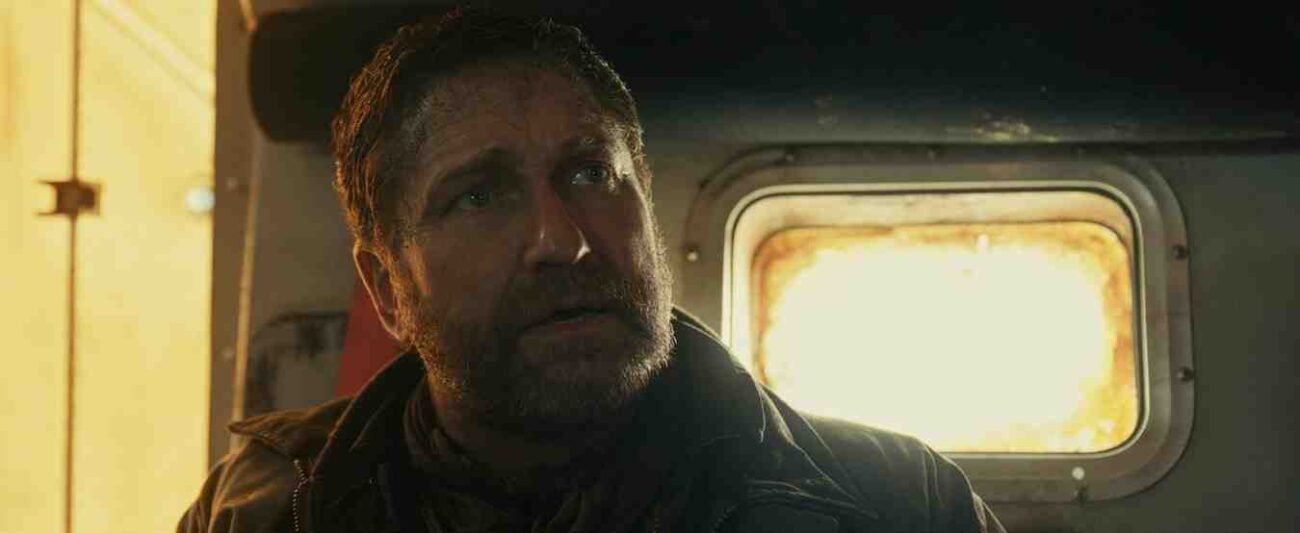
Greenland 2: Migration is Rated PG-13 by Motion Picture Rating (MPA) for some strong violence, bloody images, and action.
The story follows John Garrity, his wife Allison, and their son Nathan five years after humanity narrowly escaped extinction. The world-ending fragments of the Clarke comet have long since struck Earth, wiping out most of the population and reshaping the planet into a hostile, unstable wasteland. For half a decade, the Garritys along with a small remnant of survivors have lived underground in a massive bunker complex beneath Greenland’s ice, protected from radiation, toxic air, and collapsing ecosystems.
Life in the bunker is safe, but suffocating. Resources are rationed, the air feels recycled in more ways than one, and psychological strain is beginning to crack even the strongest families. Nathan, now a teenager, has spent nearly half his life underground. He has no real memories of cities, forests, or oceans only concrete corridors and artificial light. While John believes survival itself is the victory, Nathan yearns for something more than mere existence.
When seismic activity destabilizes sections of the bunker and communication systems fail, the leadership reveals what they’ve been hiding: satellite scans suggest that parts of the surface particularly a massive impact crater in Western Europe may now be habitable. Atmospheric readings indicate breathable air pockets and water sources. Staying underground forever is no longer viable. Humanity must migrate or disappear slowly in the dark.
The Garritys join a small convoy tasked with reaching this rumored safe zone. Their journey begins with a dangerous ascent to the surface the first time in years they’ve felt open air on their skin. What greets them is not relief, but devastation: frozen landscapes, burned cities, skeletal remains of civilization, and radiation storms that roll across the land without warning.
Highly Recommended: Avatar: Fire and Ash Parents Guide
Early in the journey, the convoy is separated during a violent storm triggered by lingering atmospheric instability. Vehicles are destroyed, people lost. The Garritys are forced to continue on foot, scavenging supplies from abandoned towns where nature has begun reclaiming concrete and steel. Every location tells a silent story of lives cut short empty schools, rusted playgrounds, prayer notes scrawled on walls.
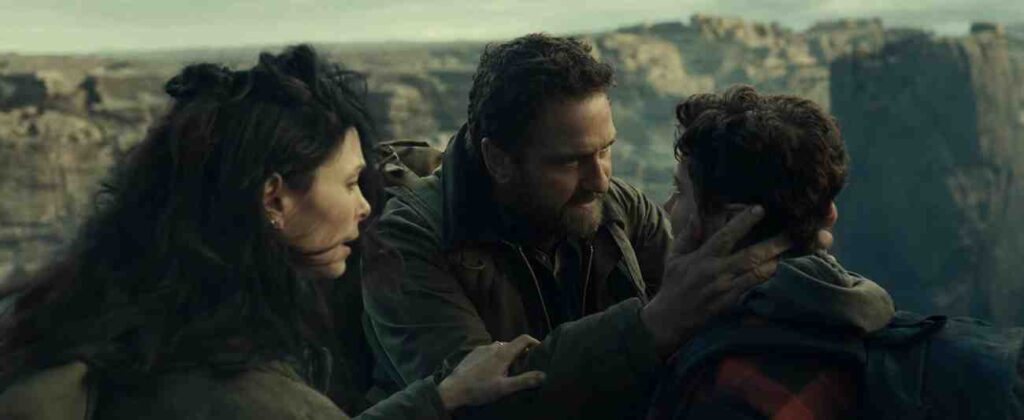
They soon encounter other survivors not all of them friendly. Scarcity has hardened people. Some communities operate on brutal rules: trade, tribute, or violence. John’s instincts as a protector clash with Allison’s growing belief that trust, even now, is necessary if humanity is to rebuild. Nathan, watching his parents struggle with impossible moral choices, begins questioning what kind of world they’re fighting to save.
Midway through the journey, the family is captured by a roaming group of survivors who have adapted to life above ground through ruthless efficiency. These people believe compassion is weakness and see migration as a lie a false hope that keeps people moving instead of accepting extinction. John is forced into a violent confrontation that leaves lasting emotional scars, reinforcing the idea that survival has already cost them more than they admit.
As they escape and continue west, the physical dangers escalate. Radiation pockets cause sickness. Supplies dwindle. Nathan becomes ill after prolonged exposure, echoing his vulnerability in the first film and reminding John that no amount of preparation can fully protect his child. Allison, pushed to her limit, refuses to stop moving believing that standing still is a death sentence.
Highly Recommended: Song Sung Blue (2025) Parents Guide
Eventually, they reach the edge of the crater zone and discover the truth is more complicated than hope-filled rumors suggested. Parts of the region are livable, but barely. A fragile settlement exists there, built from wreckage and determination, struggling to maintain order amid rising population pressure. The promise of safety has drawn too many people, too fast.
Conflict erupts as resources are stretched beyond capacity. The Garritys must decide whether to stay and fight for a place in this fragile new world or keep moving, possibly alone, into even greater uncertainty. John finally confronts the emotional truth he’s been avoiding: survival without purpose is just delayed death.
In the film’s final act, the family chooses to stay not because it’s safe, but because rebuilding requires people willing to risk loss again. John helps defend the settlement during a desperate assault from hostile survivors who see the crater as their last chance too. The battle is chaotic and costly, but it marks the first time since the comet that people fight not just to survive, but to protect something growing.
The film ends quietly. Nathan steps outside the settlement walls at sunrise, breathing air that, while imperfect, is real. Allison plants the first seeds in exposed soil. John watches them, knowing the future is uncertain but for the first time since the world ended, it feels earned.
Performances & Characters
Gerard Butler and Morena Baccarin returning as John and Allison gives Migration a heart already shaped by grit and sacrifice. Their chemistry tested by comet strikes and claustrophobic bunkers remains one of the franchise’s most compelling anchors, embodying both weary pragmatism and stubborn, protect-at-all-costs love.
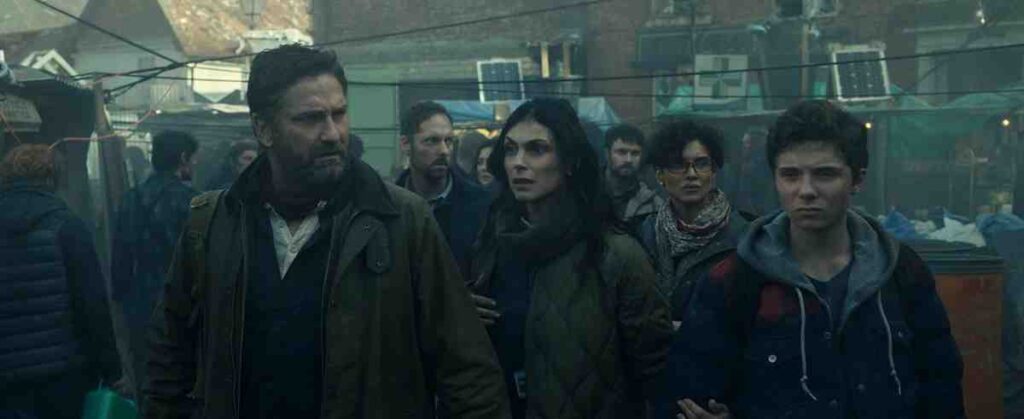
Roman Griffin Davis steps into the role of Nathan with a fresh perspective replacing the original actor and judging by trailers, he brings a teenage restlessness that contrasts poignantly with his parents’ hardened survival instincts. The dynamic of a son who’s known only bunker walls for most of his life adds a fresh emotional wrinkle: hope tinged with skepticism.
Highly Recommended: Anaconda (2025) Parents Guide
Supporting players like Amber Rose Revah and Sophie Thompson promise to inject unpredictable energy strangers on the road who may be friends or threats helping the film avoid the isolation trap common in many survival sequels.
Direction, Visuals & Pacing
Ric Roman Waugh’s return signifies a stylistic continuity with the first Greenland, which balanced visceral set pieces with human urgency. If the trailers are any guide, Migration tilts even more emphatically into wide-open, merciless landscapes icy plains, ruined cities, and the eerie silence of abandoned towns.
Visually, there’s a promise of stark contrast: the claustrophobia of bunker life versus the overwhelming emptiness of a world that’s been burned, frozen, and battered beyond recognition. Cinematographer Martin Ahlgren’s work will likely lean into this, framing beauty and devastation in the same breath.
At a brisk runtime (around 1h 38m), the pacing should favor tension over filler, though sequels of this nature sometimes stumble in balancing action and introspection. If Waugh’s past work is any indication, expect kinetic set pieces woven with quieter, human moments that make you care why these people are running not just that they are.
Content Breakdown for Parents
Violence & Intensity: Greenland 2: Migration contains frequent scenes of danger and conflict, though it avoids crossing into graphic territory. Characters face gunfire, explosions, physical fights, and life-or-death situations throughout the film, often driven by desperation rather than malice. Some moments include visible blood and injured characters, particularly during attacks by hostile survivors or chaotic crowd scenes. The violence is tense and emotionally grounded rather than stylized, which can make it feel more upsetting than a typical action movie. Younger viewers may find the sustained sense of threat overwhelming, especially because the film rarely offers long breaks from danger.
Language: Characters occasionally use profanity such as “damn,” “hell,” and a few stronger expletives during moments of fear, pain, or anger. The swearing reflects the high-stress environment rather than an aggressive or crude tone, and there are no slurs or sexually explicit remarks. Most parents of teens will likely find the language unsurprising given the film’s intense subject matter.
Sexual Content & Nudity: There is no sexual content or nudity in Greenland 2: Migration. A married couple shares brief moments of affection and emotional intimacy, but these are portrayed in a restrained, respectful way. Romance is not a focus of the story, and nothing in this category should raise concern for parents.
Drugs, Alcohol & Smoking: Substance use is minimal and not glamorized. There are occasional references to medical supplies or survival medications, and adults may briefly drink alcohol in a practical or background context. Drug use, smoking, or recreational substance abuse is not depicted, and this aspect of the film is unlikely to trouble parents.
Recommended Age Range: Best for ages 13–16+, depending on maturity
Older teens and adults will connect most strongly. Not recommended for younger kids or sensitive viewers

Stephanie Heitman is a seasoned journalist and author dedicated to helping parents navigate the world of Hollywood entertainment through thoughtful, family-oriented film reviews. With over a decade of experience in writing and a passion for fostering safe, enriching viewing experiences, Stephanie launched Parentguiding.com to provide parents with the insights they need to make informed choices for their families.