
The Mother and the Bear is Not Rated, but based on its content, tone, and themes, it would likely fall somewhere between PG-13 and a soft R, depending on the rating board.
There’s no graphic violence or explicit sexual content, but there are adult themes, sexual references played for humor, and emotional material that younger viewers may not fully understand or appreciate.
Mothers are a paradox you grow up living inside of. You spend years pushing against them, only to realize often too late how much of your emotional architecture they quietly built. Mother daughter relationships, especially once the daughter has crossed into adulthood and carved out a life elsewhere, tend to be messy, unresolved, and deeply layered. The Mother and the Bear understands this instinctively. What’s striking and a little daring is that it attempts to map that bond without ever letting the mother and daughter share the screen together. You feel the absence. You’re meant to.
Johnny Ma’s film unfolds in the frozen stillness of Winnipeg, a place that feels less like a city than an emotional condition. This is where Sumi, a 26-year-old Korean woman played by Leeree Park, has chosen to settle. To her mother Sara, portrayed by Kim Ho-jung with remarkable dimensionality, the decision is baffling. Winnipeg is cold, foreign, distant geographically and spiritually from the Korea she calls home. Why would anyone, let alone her daughter, choose such isolation? That question haunts the film long before the narrative forces Sara to confront it head-on.
When Sumi is hospitalized after an accident and placed in a medically induced coma, Sara has no choice but to make the journey she’s resisted. What she finds is a daughter she barely knows. Sumi can’t speak for herself, so Sara fills the silence the only way she knows how by rummaging through her daughter’s life. She pokes through the apartment, talks to friends, and gradually pieces together a version of Sumi that was never offered to her directly. It’s a quietly invasive process, tinged with genuine concern and unmistakable control. Sara learns more than she expects, yet still can’t reconcile one glaring absence: no husband, no settled domestic future. So, naturally disastrously she decides to intervene, impersonating Sumi on dating apps in an attempt to “fix” what she sees as unfinished.
Highly Recommended: Father Mother Sister Brother Parents Guide
That misguided mission opens the door to something Sara never anticipated: her own emotional reckoning. Through her online escapades, she meets Sam, a gentle, open-hearted restaurant owner played by Lee Won-jae. He’s Korean, familiar, grounding a reminder of a life she once had and a grief she’s carried since losing her husband 25 years earlier. Their connection unfolds slowly, with a tenderness that sneaks up on you. Without overstating it, the film lets you feel how deeply Sara has been starved for companionship. Watching her rediscover desire, curiosity, and possibility is unexpectedly moving. In many ways, The Mother and the Bear becomes a coming-of-age story just not for the person you initially expect. Seeing a woman in her 50s tentatively reenter emotional life is something cinema doesn’t offer often enough.
Tonally, the film occupies familiar territory. You might recognize echoes of The Big Sick in its hospital-bound revelations and cultural misunderstandings, or traces of Everything Everywhere All at Once in its exploration of mother–daughter tension and queerness. But Ma keeps the balance mostly intact, shifting between humor and melancholy without losing his footing. That balance, however, depends almost entirely on Kim Ho-jung. She carries the film with an openness that invites affection even when Sara’s behavior becomes intrusive or absurd. From the moment she appears, Ho-jung gives Sara a wide-eyed curiosity not naïveté exactly, but a sincere desire to understand a world she doesn’t recognize.
Highly Recommended: The Testament of Ann Lee Parents Guide
One of the film’s most arresting moments is silent. Sara imagines her daughter playing the piano, and in that wordless sequence, Ho-jung communicates love, longing, and regret with a delicacy that lingers. Inti Briones’ cinematography leans into these small emotional discoveries, capturing Sara’s moments of wonder as she begins to explore the city and herself alongside Sam. Their relationship is often articulated through food, which becomes a shared language. The careful ritual of making kimchi, the comfort of a well-made bowl of noodles these scenes aren’t decorative; they’re connective tissue. You can almost taste the intimacy forming between them.
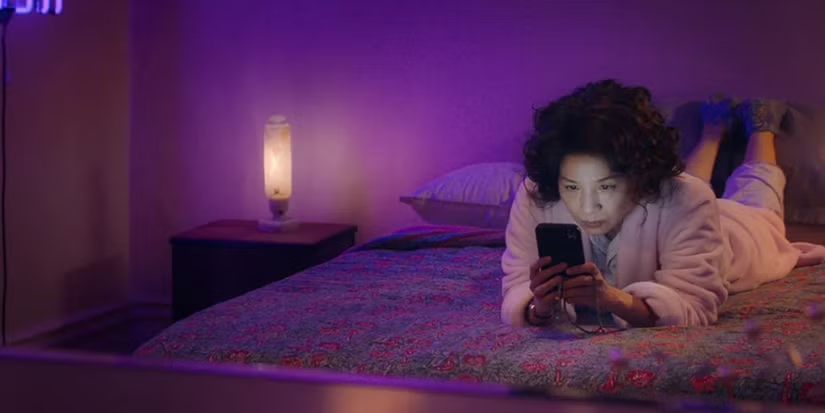
The film’s humor, meanwhile, is sharper than you might expect. Sara’s unfamiliarity with modern dating culture leads to some wonderfully awkward and occasionally raunchy misunderstandings. She mistakes a vibrator for a neck massager. She has no idea what the eggplant emoji implies. Ho-jung commits fully, never winking at the audience, which is precisely why the jokes land. Even in the broadest moments, Sara feels like a real person rather than a comic device.
Ma’s direction shows thoughtful restraint, particularly in his repeated use of mirrors. Sometimes the effect is playful a cleverly staged convenience store scene draws laughs through reflection alone. Other times, the mirrors serve a more introspective purpose, framing Sara as she begins to confront who she is and what she wants beyond motherhood. It’s an elegant visual motif, suggesting self-examination without hammering the point home.
Still, for all its warmth and charm, The Mother and the Bear struggles with its own structural conceit. Keeping Sumi in a coma is thematically sound the silence allows Sara’s projection to run unchecked but it also robs the relationship of specificity. We understand the dynamic in broad strokes: a judgmental mother, a private and artistic daughter. But we’re never given enough texture to feel their history. A flashback, a remembered phone call, even a more detailed anecdote could have grounded their bond in lived experience. As it stands, the emotional motivations feel generalized, leaning on familiar archetypes rather than something uniquely theirs.
Highly Recommended: The Housemaid (2025) Parents Guide
The film’s web of connections grows increasingly intricate over its 100-minute runtime, revealing surprising overlaps between characters. At times, this works beautifully, like a modern Shakespearean comedy where everyone is closer than they realize. At other moments, it becomes muddled. Certain implications are left too vague, and instead of feeling clever, the twists can feel disorienting. You may find yourself piecing together logistics rather than absorbing emotional payoff, which blunts the impact of what should be revelatory turns.
And then there’s the bear. Ma introduces the titular animal through elements of magical realism, suggesting metaphor and symbolism, but the idea never quite coheres. The bear feels conceptually interesting yet emotionally undercooked. Its meaning remains fuzzy, its presence more distracting than illuminating. Instead of deepening the film’s themes, it occasionally pulls you out of them a reminder that symbolism, when too broad, can flatten rather than enrich.

Even with its missteps, The Mother and the Bear is a film made with care, empathy, and a genuine curiosity about emotional inheritance. It doesn’t always know how to articulate its ideas with precision, but its heart is unmistakably in the right place. You can feel the longing beneath every choice the desire to understand those we love before time, distance, or silence makes it impossible.
The Mother and the Bear Parents Guide
Violence & Intensity: The Mother and the Bear contains no physical violence or aggressive behavior. The most intense element is an off-screen accident that leaves a young woman hospitalized in a medically induced coma. While this could sound alarming on paper, the film handles it gently and without graphic detail. Hospital scenes focus more on emotional waiting and uncertainty than medical trauma. The overall tone remains quiet and reflective, so while the situation is serious, it’s unlikely to be frightening for teens though it may feel emotionally heavy for sensitive viewers.
Language: The language in the film is generally mild. There is very little profanity, and when it does appear, it’s not harsh or frequent. Most potentially concerning dialogue comes from awkward or humorous misunderstandings around modern dating and technology. The tone is conversational rather than crude, and there are no slurs or hateful language. Parents of younger teens may still want to be aware that some dialogue hints at adult topics, even if the words themselves are fairly tame.
Sexual Content / Nudity: There is no nudity and no explicit sexual activity shown on screen. However, the film does include some adult humor related to dating apps and sexual awareness mainly played for comedic effect. One running joke involves a mother misunderstanding what a sex toy is, and another references the meaning of certain emojis used in online flirting.
Drugs, Alcohol & Smoking: Alcohol appears occasionally in social settings, such as meals or casual outings, but drinking is not excessive or portrayed as a coping mechanism. There is no depiction of drug use, and smoking is either absent or extremely minimal. Substance use is not a thematic focus of the film and is unlikely to raise concerns for most parents.
Scary or Disturbing Scenes: This is not a scary movie in the traditional sense. There are no jump scares, threats, or horror elements. That said, some viewers may find the emotional atmosphere unsettling at times, particularly the themes of illness, unconsciousness, grief, and loneliness. The film also uses magical realism including symbolic appearances of a bear which may feel strange or confusing rather than frightening. The unease comes from emotional weight, not visual content.
The Mother and the Bear will be released on January 2, 2026 at the IFC Center in New York and the following week at the Laemmle in L.A., followed by additional markets.

Stephanie Heitman is a seasoned journalist and author dedicated to helping parents navigate the world of Hollywood entertainment through thoughtful, family-oriented film reviews. With over a decade of experience in writing and a passion for fostering safe, enriching viewing experiences, Stephanie launched Parentguiding.com to provide parents with the insights they need to make informed choices for their families.