In Our Blood is not rated because it has not undergone the official rating process by the Motion Picture Rating (MPA). I would recommend ages 15+ (mid-teens and older) for this film.
It feels almost poetic that Pedro Kos, an award-winning documentarian known for his empathetic gaze and human touch, would step into narrative filmmaking through the narrow, trembling lens of found footage horror. His debut feature, In Our Blood, premiering at the Fantasia International Film Festival, begins as a young filmmaker’s attempt to reconnect with her estranged mother and evolves into something far more harrowing and heartfelt. What Kos brings from his documentary roots isn’t just an aesthetic; it’s a sensibility. The film’s handheld camera doesn’t merely simulate realism it breathes it, infusing every frame with intimacy, unease, and an emotional weight that feels uncomfortably close.
At first, you might think you’re watching another indie doc about family reconciliation. But as In Our Blood unfurls, the edges start to darken. Kos uses the language of horror not to shock, but to excavate to expose the rot beneath the surface of an America fractured by addiction and homelessness. If you’ve seen his Netflix short Lead Me Home, you’ll recognize his compassionate yet unflinching eye. Only this time, instead of the tent cities of the West Coast, his story leads us to Las Cruces, New Mexico a place that hums with sun-baked desolation and the quiet despair of forgotten lives.
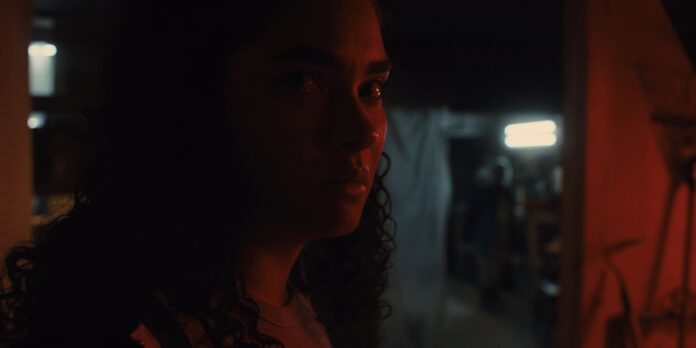
Also Read: The Woman in Cabin 10 Parents GuideAt the center is Emily (Brittany O’Grady), a filmmaker haunted by the mother she lost long before she was taken from her care at thirteen. Sam (Alanna Ubach), once consumed by addiction, reaches out years later with a fragile olive branch: an invitation to Thanksgiving and a promise that she’s clean. Emily, equal parts wary and hopeful, arrives with her cameraman, Danny (E.J. Bonilla), ready to turn this reunion into a film maybe even a redemption story. At first glance, it seems possible. Sam’s home looks tidy, her eyes clear, her laughter practiced but sincere. Yet as the interviews begin, cracks appear in the facade. You can feel Emily’s old wounds reopening, the unspoken rage and yearning bleeding through every hesitant question.
Then, just as the past begins to resurface, Sam vanishes. No note, no clues just absence. What started as a documentary becomes an investigation, and then, something else entirely. Emily and Danny, driven less by professional curiosity than emotional desperation, descend into a labyrinth of dark corners and elusive truths. Kos stages this unraveling with a nervous authenticity you can almost taste the dust in the air, hear the shaky breath behind the camera. Each strange encounter, each inexplicable sound, pushes them deeper into a nightmare that feels less supernatural than systemic.
What sets In Our Blood apart from the typical found-footage fare is its unwavering authenticity. Kos doesn’t just mimic realism he earns it. Much of the film’s power comes from the decision to cast non-actors from Las Cruces’s homeless community. Their presence is arresting, their words unscripted, their stories bleeding into the fiction until the boundary between what’s real and what’s staged begins to dissolve. As Emily and Danny interview people from Sam’s orbit residents of a clinic serving those battling addiction and mental illness the film begins to feel like a mirror held up to a forgotten America. Addiction here isn’t a plot device or a moral failing; it’s a gravitational force, pulling people in and refusing to let go. Danny himself knows that world too well the gangs, the drugs, the thin line between survival and surrender.
Recommended: The Monster of Florence (2025) Parents GuideThrough their search for Sam, Emily and Danny stumble upon a grim truth: Las Cruces is a place where people vanish quietly, where violence against the vulnerable is met with bureaucratic indifference. Kos doesn’t editorialize; he lets the horror emerge from the texture of the world itself the way light flickers in a hallway, the way someone’s story trails off mid-sentence, the way authority seems to shrug at another missing person. It’s horror born not of monsters, but of neglect.
And then, just when you think you understand the film’s trajectory, In Our Blood takes a daring turn. Without spoiling it, Kos delivers a final act that swings for the fences bold, divisive, and entirely earned. The twist reframes everything that came before, adding a new dimension to the film’s moral inquiry: how we perceive and punish addiction, how easily society turns its back on those who’ve already been broken. It’s the kind of ending that doesn’t just shock it lingers, unsettling you long after the credits roll.
The best horror films, the ones that stay with you, don’t rely on jump scares or spectacle. They terrify by revealing the world as it truly is. In Our Blood belongs to that lineage. Beneath its shaky camera and haunted silences lies a film about pain generational, systemic, unhealed and about the quiet, desperate love that persists in spite of it. It’s not just found footage; it’s found humanity.
Detailed content breakdown for parents
Violence & Intensity: There are strong horror- and thriller-style elements: a found-footage aesthetic means shaky cameras, suspense, sudden scares and a sense of vulnerability. The disappearance of a mother and subsequent search among vulnerable populations gives the film a real-world terror. Reviews describe a “frightening climax” and a sense of dread. So while there may not be graphic gore constantly, the atmosphere is intense and unsettling, and younger or sensitive viewers may find it disturbing.
Sexual Content / Nudity: There is no prominent mention in sources of explicit sexual content or nudity. The focus is more on addiction, disappearance and horror rather than erotic scenes. But the film does deal with adult relationships and past trauma, so context may exist.
Drugs, Alcohol & Smoking: This is a major theme. Sam’s past addiction is central to the story. The film delves into the world of drugs, gangs, and homelessness interviewing real people struggling with substance use. Reviews note that addiction is not just a backdrop but a driving story element. That means there are likely scenes of drug references, perhaps substance use, and the consequences of addiction depicted.
Scary or Disturbing Scenes: The entire structure is built on tension, mystery, disappearance, vulnerability of homeless individuals, real-world horrors (not just supernatural). One review says: “What’s surprisingly discovered leaves a sense of dread.” Because of the found-footage style, the viewer is placed in precarious situations, which amplifies fear. Younger viewers may find this very scary.
Parental Concerns
- The intensity of the horror/thriller elements may surprise families expecting a typical “mother-daughter documentary” film. The genre shift into horror is significant.
- The depiction of addiction, homelessness and missing vulnerable people is emotionally heavy; younger children may find the subject matter confusing or upsetting.
- The shaky camera, dark tone and suspense might make this unsuitable for kids who are sensitive to scary imagery or suspenseful mysteries.
- Because there is no widely reported official rating, parents should approach cautiously and perhaps preview before showing to younger teens.

Stephanie Heitman is a seasoned journalist and author dedicated to helping parents navigate the world of Hollywood entertainment through thoughtful, family-oriented film reviews. With over a decade of experience in writing and a passion for fostering safe, enriching viewing experiences, Stephanie launched Parentguiding.com to provide parents with the insights they need to make informed choices for their families.